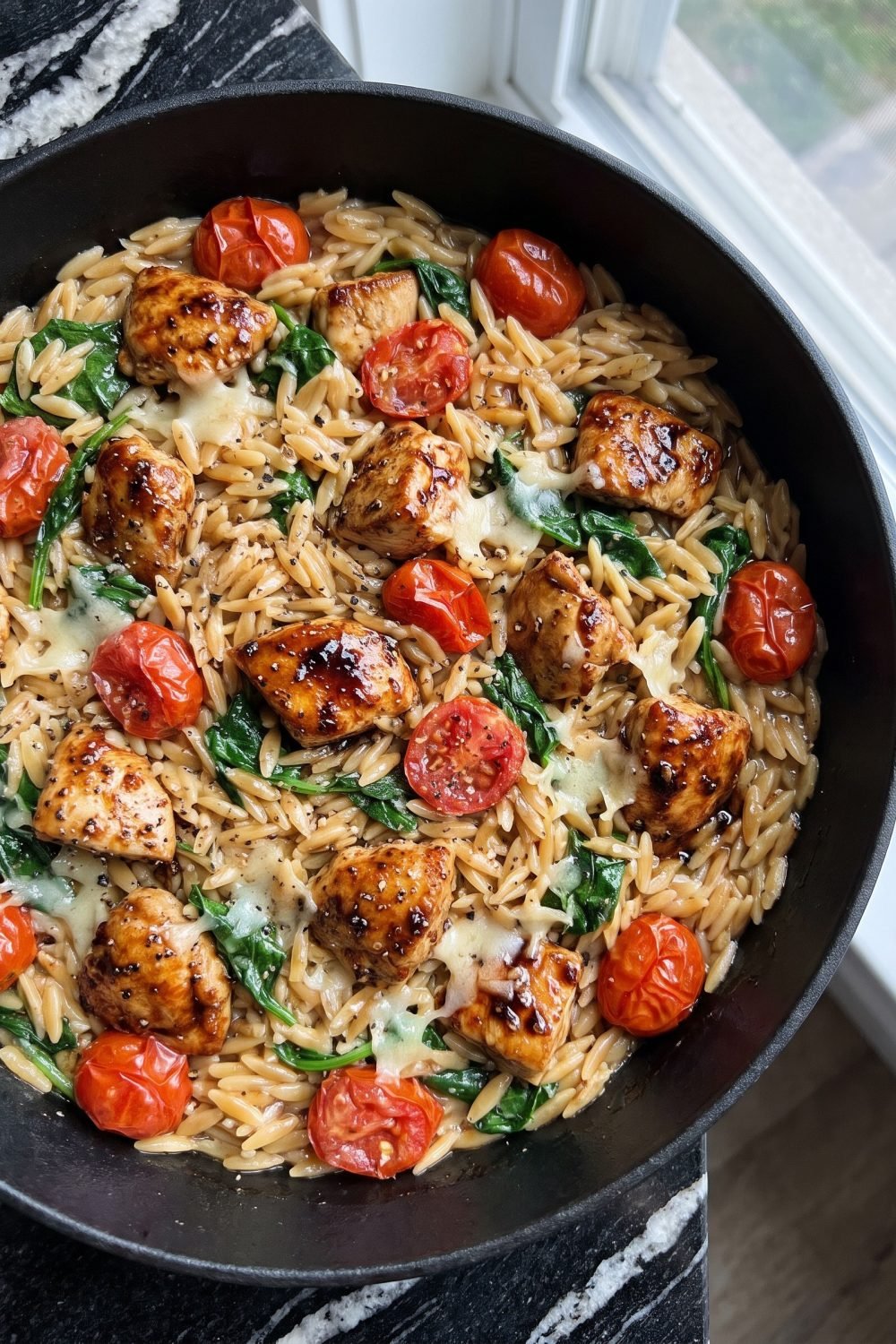
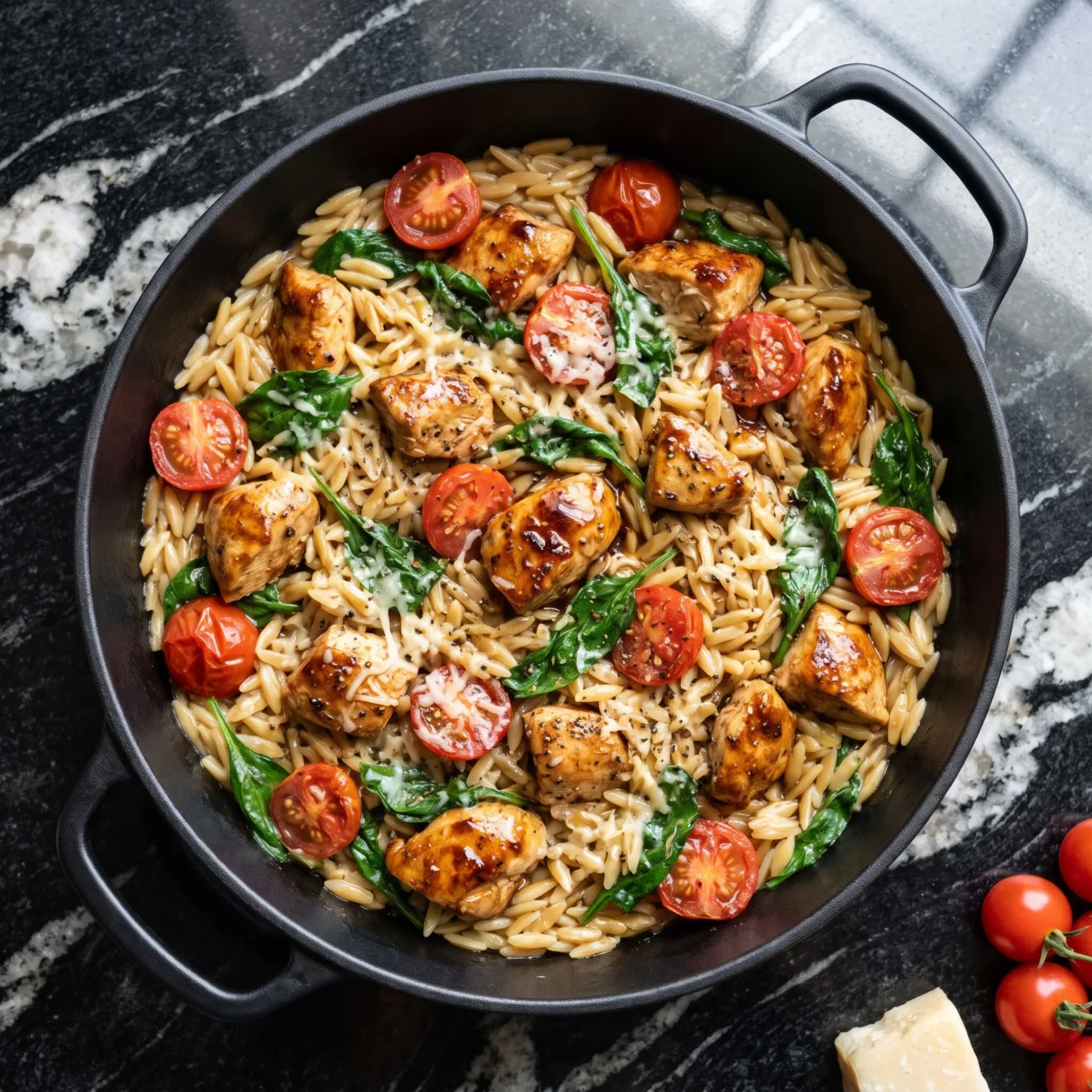
This high-protein balsamic chicken orzo for two is what I make when I want dinner to feel a little special but only want to wash one pan. Bite-size chicken gets a hard sear, then a quick toss in balsamic and honey until it turns glossy and sticky. The orzo cooks in the same skillet, soaking up every browned bit the chicken left behind. Cherry tomatoes and spinach go in near the end, so they stay bright instead of turning to mush.
It makes two real dinner portions. This isn't a family recipe divided by three, where the liquid ends up wrong and the pan is too big. The amounts, the pan and the timing are all worked out for a 10-inch skillet and two hungry people.
At a glance: about 35 minutes from cutting board to table · one skillet · roughly 55 grams of protein per plate (estimated) · nothing tricky, just one step that needs your attention.
Built for Two, Not Shrunk From Six
Halving a big one-pan orzo recipe sounds simple, but it rarely works. Liquid doesn't scale in a straight line. A wide pan with less broth in it loses moisture faster. That's why a halved recipe so often gives you orzo that's dry on top and stuck on the bottom before it's even tender.
So this version uses a bit more broth for the amount of orzo than most family-size recipes, and keeps the lid on for most of the simmer. In a 10-inch skillet, the orzo sits in a layer about half an inch deep. That's the sweet spot: shallow enough to cook evenly, deep enough not to scorch.
The amount of chicken is deliberate too. Two average breasts give each of you a full 6-ounce portion. That's what makes this a proper high-protein meal and not a bowl of pasta with a few chicken pieces hiding in it.
Why the Orzo Cooks in the Skillet
You could boil orzo in a separate pot like any other pasta. I don't, for two reasons.
The first is flavor. Once the chicken comes out, the pan is coated with browned bits and a thin film of balsamic glaze. When the broth goes in, all of that dissolves into the cooking liquid, and the orzo soaks it up. Boiled orzo tastes like plain pasta. Skillet orzo tastes like the whole dish.
The second is texture. Orzo releases starch as it simmers. In a pot of boiling water, that starch goes down the drain. In the skillet it stays put and turns the last few spoonfuls of broth into a light, creamy sauce, with no cream at all. Stir the Parmesan in off the heat and it gets even silkier.
And there's one less pot in the sink. On a Tuesday night, that might matter most of all.
The Ingredients That Matter Most
Chicken breast, cut small
Whole breasts dry out fast, especially the thin end. Cut into 1-inch pieces, they sear in about 6 minutes and stay juicy because every piece cooks at the same rate. Thighs work too (see the swaps below).
Balsamic vinegar
You don't need an expensive aged bottle, but skip the thinnest, sharpest kind if you can. Check the label. If grape must is listed first, it reduces into a rounder, sweeter glaze. If it's mostly wine vinegar with caramel color, lean on the honey a little to balance the bite.
Orzo
Orzo is just pasta shaped like grains of rice, and any regular brand works. Whole-wheat orzo adds fiber but needs a few extra minutes and a splash more broth.
Parmesan
Grate it from a wedge if you can. Pre-shredded Parmesan is coated so it won't clump in the bag, and that coating stops it from melting smoothly into the orzo. You'll see little stringy bits instead of a glossy finish.
How Sticky Should the Balsamic Get?
This is the step that makes the dish, and it happens fast. Once the chicken is cooked through, the balsamic and honey hit the hot pan and bubble right away. Within 30 to 60 seconds, the liquid goes from thin and watery to glossy. Instead of pooling in the pan, it clings to each piece of chicken.
That's your cue to get the chicken out. Wait much longer and the sugars go from sticky to burnt, especially in a stainless steel pan. You'll smell it before you see it: sweet and tangy turns sharp and acrid. If that happens, the chicken is still fine. Just scrape out the scorched bits before the orzo goes in, or the whole dish will taste bitter.
My trick is to turn the heat down to medium-low right before the balsamic goes in. The pan holds enough heat to reduce the glaze, and you get a much wider window to work with.
Mistakes That Are Easy to Make
- Moving the chicken too soon. On stainless steel, chicken sticks at first. Leave it alone. After 2 to 3 minutes the browned side releases on its own. Pull at it early and the crust stays stuck to the pan.
- Crowding the pan. Twelve ounces of chicken just fits in one layer in a 10-inch skillet. If yours looks packed, sear it in two batches. Crowded chicken steams instead of browning.
- Forgetting to stir the orzo. Orzo settles and sticks to the bottom. Give it a stir every few minutes while it simmers, scraping along the base of the pan.
- Adding the spinach too early. Spinach only needs about a minute off the heat. Any longer and it turns dark and stringy.
Where the Protein Comes From
Most of it comes from the chicken. A 6-ounce portion of raw chicken breast has close to 40 grams of protein on its own. The orzo adds about 8 grams per serving and the Parmesan about 5 more. By our estimate each plate lands around 55 grams, well past the 30-gram line we use for the High-Protein label on this site.
It's also a balanced plate: lean protein, a moderate scoop of pasta, and vegetables cooked right in rather than added as an afterthought. If you want it lighter, the swaps below show you how.
Swaps That Work (and Two That Don't)
- Chicken thighs: Use boneless, skinless thighs cut the same way. They're more forgiving if you cook them a minute too long, and a little richer.
- Shrimp: Sear them for 1 to 2 minutes per side and glaze them the same way. Add them back at the very end so they don't overcook.
- Kale instead of spinach: Stir it in with the tomatoes, since it needs a few minutes to soften.
- Gluten-free orzo: It works, but brands soak up liquid very differently. Start checking a few minutes early and keep extra broth nearby.
- Don't use bottled balsamic glaze in the pan. It's already thick and sugary and burns almost instantly. If you love it, drizzle a little over the bowls at the end.
- Don't use frozen spinach. It releases too much water and leaves the orzo soupy.
What to Serve With High-Protein Balsamic Chicken Orzo for Two
It's a complete meal on its own, so you don't need anything else. If you want a side, a simple green salad with a lemony dressing cuts through the richness of the Parmesan. Roasted broccoli or asparagus works too. For a drink, a crisp white like Pinot Grigio goes well with the balsamic. Sparkling water with a slice of lemon does the same job without the alcohol.
If You Do End Up With Extra
This is meant to be finished in one sitting, but if a portion is left over, keep it in an airtight container in the fridge for up to 3 days. Orzo keeps soaking up liquid as it sits, so add a tablespoon or two of water or broth when you reheat it. Warm it in a skillet over medium-low, or covered in the microwave. I don't recommend freezing it, because the orzo turns soft and grainy.