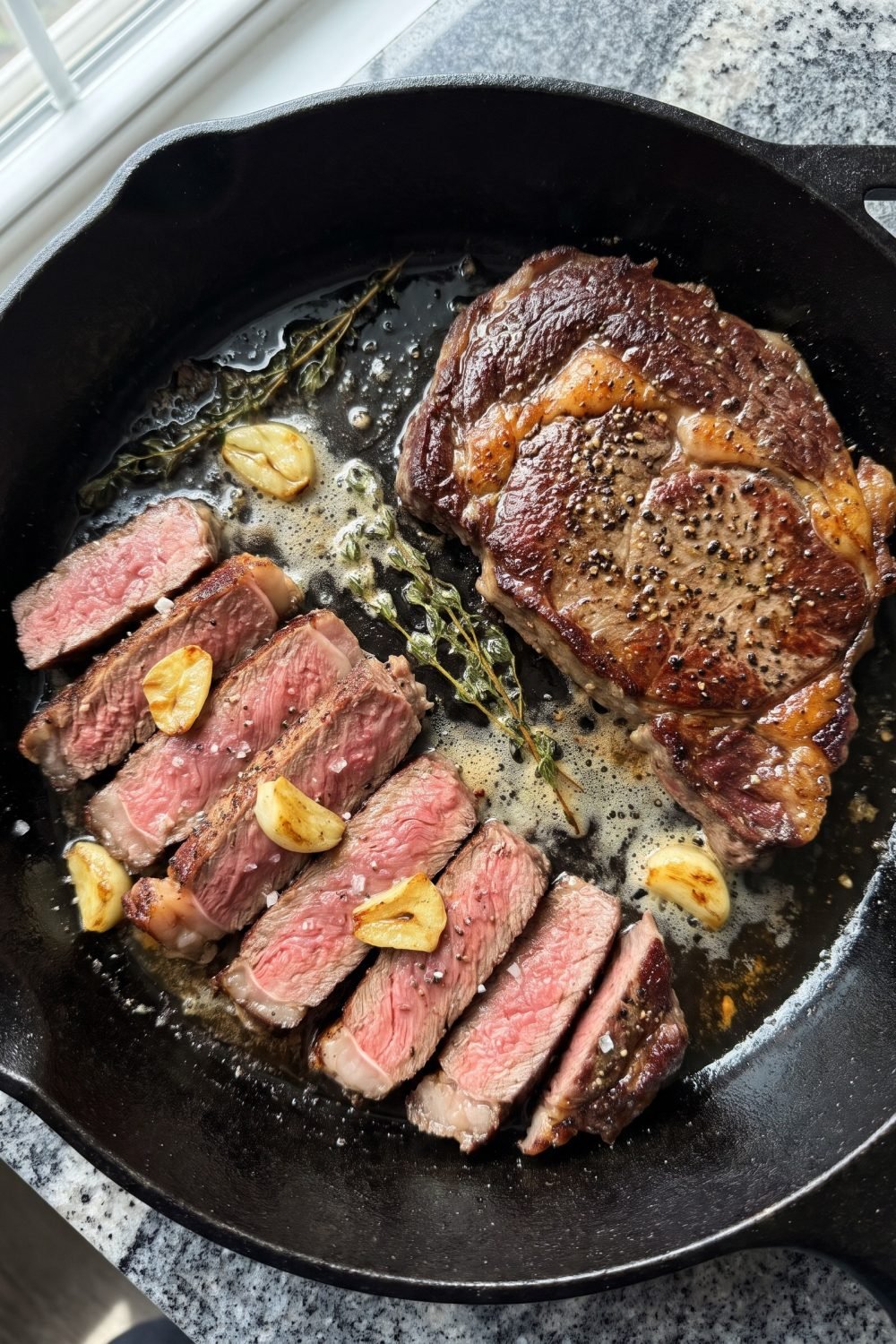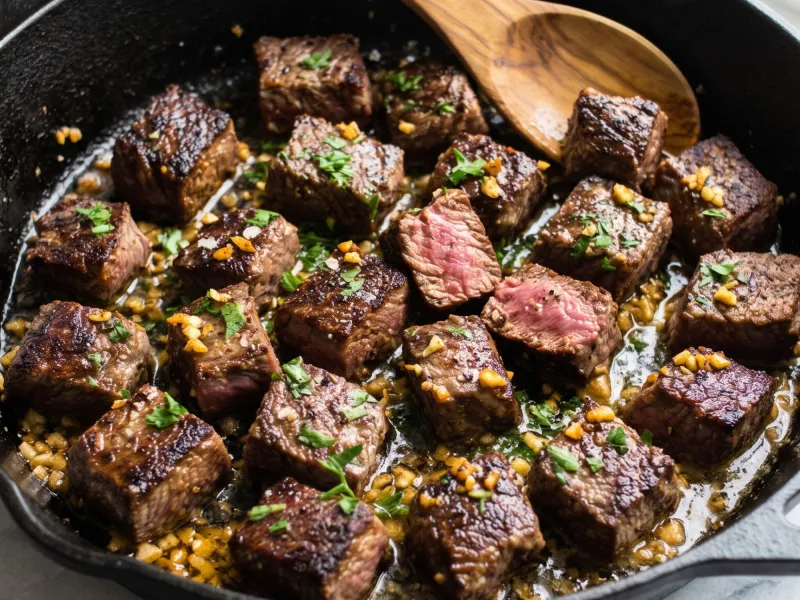
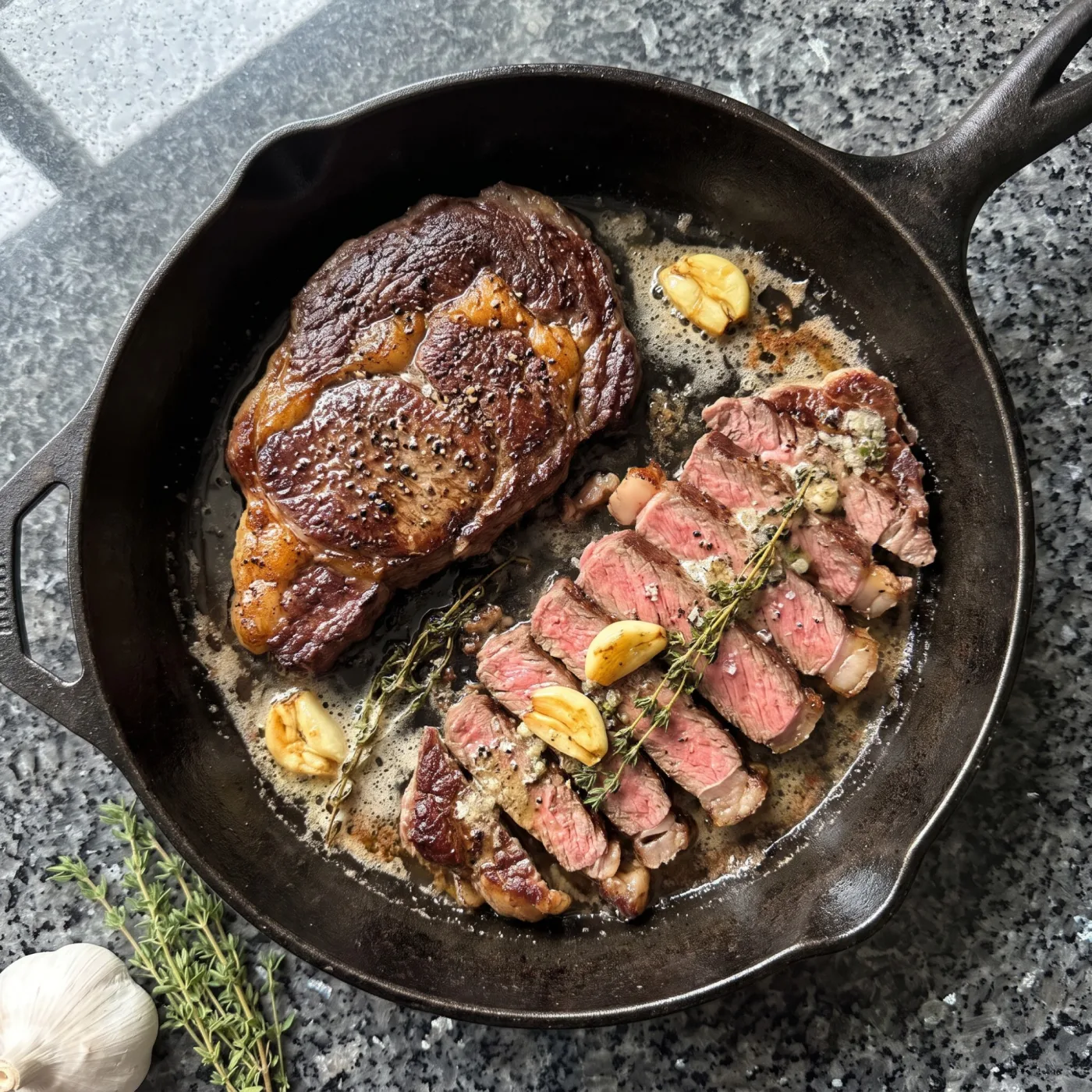
This pan-seared ribeye steak for two is how you get a steakhouse dinner without the steakhouse bill. Two well-marbled ribeyes go into a very hot cast-iron skillet, build a deep brown crust, then finish in foaming butter with garlic and fresh thyme that you spoon over them again and again. After a short rest, they're juicy from edge to edge.
The whole thing takes about 25 minutes. Most of that is the pan heating up and the steaks resting.
What Makes a Steakhouse Crust
That dark, crackly crust comes from the Maillard reaction, the browning that happens when meat's surface gets hot and dry. Three things make it happen fast enough to brown the outside before the inside overcooks:
- A dry surface. Moisture has to evaporate before browning can start. Pat the steaks thoroughly with paper towels.
- A very hot pan. Cast iron holds heat like nothing else, so it doesn't cool down when cold steak hits it.
- Full contact. Press the steaks down gently for the first few seconds and then leave them alone.
Get those three right and the crust takes care of itself.
Buying Ribeye for Two
Ribeye is the most forgiving steak to pan-sear because of its marbling, the thin white streaks of fat running through the meat. That fat melts as it cooks, keeping the steak juicy and full of flavor.
Look for boneless ribeyes about 1 inch thick and around 8 ounces each. Thinner steaks overcook before they brown; much thicker ones need finishing in the oven. In the US, Choice grade has plenty of marbling for a great result at a fair price, and Prime is richer still if it's a special night. Choose steaks with even, fine marbling rather than a few thick strips of fat.
Bone-in ribeyes work too. Add a minute or two per side and check the temperature near, but not touching, the bone.
Salt Early or Right Before?
Salt draws moisture out of meat. Within about 10 minutes of salting, the surface gets wet. Given more time, that moisture is reabsorbed along with the salt, which seasons the steak more deeply.
So there are two good options. Salt right before the steaks go in the pan, which is what this recipe does for a quick weeknight version. Or salt them at least 45 minutes ahead, even the night before, and leave them uncovered on a rack in the fridge so the surface dries out for an even better crust. The only time to avoid is in between: steaks salted 15 minutes ahead hit the pan with a wet surface.
Render the Fat Cap
Most ribeyes have a strip of fat along one edge. Left alone, it stays chewy and pale. After you flip the steaks, use tongs to stand each one up on that fatty edge and hold it against the pan for 30 to 60 seconds. The fat renders, turns golden and crisp, and adds flavor to the pan for the butter that comes next.
Butter Basting, Step by Step
This is the steakhouse move, and it's easier than it looks.
- Turn the heat down to medium so the butter doesn't burn.
- Add the butter, smashed garlic and thyme sprigs to the pan beside the steaks.
- Tilt the skillet toward you so the melted butter pools at the near edge.
- Using a large spoon, scoop the foaming butter and pour it over the steaks, again and again, for 1 to 2 minutes.
The hot butter cooks the top of the steak gently while carrying the garlic and herb flavor into the crust. Keep basting until the steaks reach the temperature you want.
Doneness Without Guesswork
An instant-read thermometer is your best friend here. Insert it sideways into the center of the thickest part. Pull the steaks off the heat about 5°F (3°C) below your target, because they keep cooking as they rest:
- Rare: pull at 115°F (46°C), rests to about 120°F (49°C)
- Medium-rare: pull at 125°F (52°C), rests to about 130°F (54°C)
- Medium: pull at 135°F (57°C), rests to about 140°F (60°C)
The USDA recommends 145°F (63°C) with a 3-minute rest for whole cuts of beef. Many people prefer ribeye medium-rare, where the fat is soft and the meat is rosy, but cook it to whatever you're comfortable with.
Why Resting Matters
When steak comes off the heat, its juices are concentrated in the center. Cut it right away and they run out onto the board. Resting for 5 minutes lets the temperature even out, so more of those juices stay in the meat. Rest the steaks on a cutting board, not on a plate, so the bottom crust doesn't steam in its own juice.
Slicing Against the Grain
Look closely at the steak and you'll see thin lines running across it: the muscle fibers. Slice across those lines, not along them, into strips about half an inch wide. Each bite has shorter fibers, so even a well-marbled ribeye feels more tender. Spoon the garlic butter from the pan over the slices before serving.
Pan-Seared Ribeye Steak for Two: Sides and a Simple Menu
Ribeye is rich, so it pairs best with sides that are either creamy and comforting or fresh and sharp. Mashed potatoes or crispy roast potatoes are the classic choice, while a green salad with a mustardy vinaigrette or roasted asparagus balances the plate. Sautéed mushrooms in the leftover butter are a five-minute bonus.
For a date night, Valentine's Day or New Year's Eve, make the sides first and keep them warm, then cook the steaks last, since they only need about 15 minutes at the end. A bold red like Cabernet Sauvignon or Malbec stands up to the marbling. For a non-alcoholic option, try sparkling water with a splash of pomegranate or cranberry juice.
When I cook my steak, I always lay out everything before the pan goes on, because once it's hot, things move fast. I also open a window and switch on the fan first, since a properly hot pan will smoke. And I save the garlic from the pan: soft, butter-roasted cloves are lovely smashed onto a piece of crusty bread.