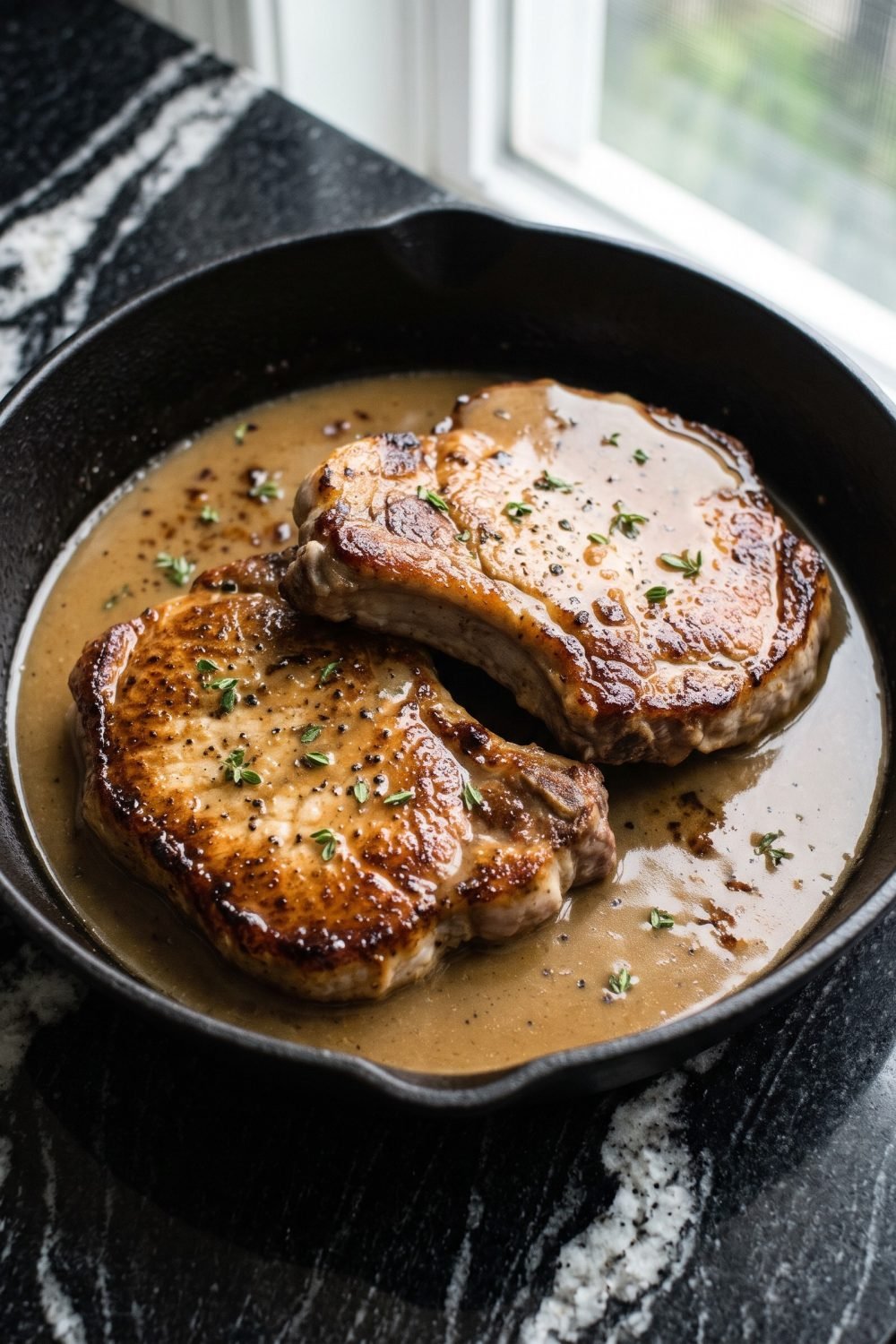
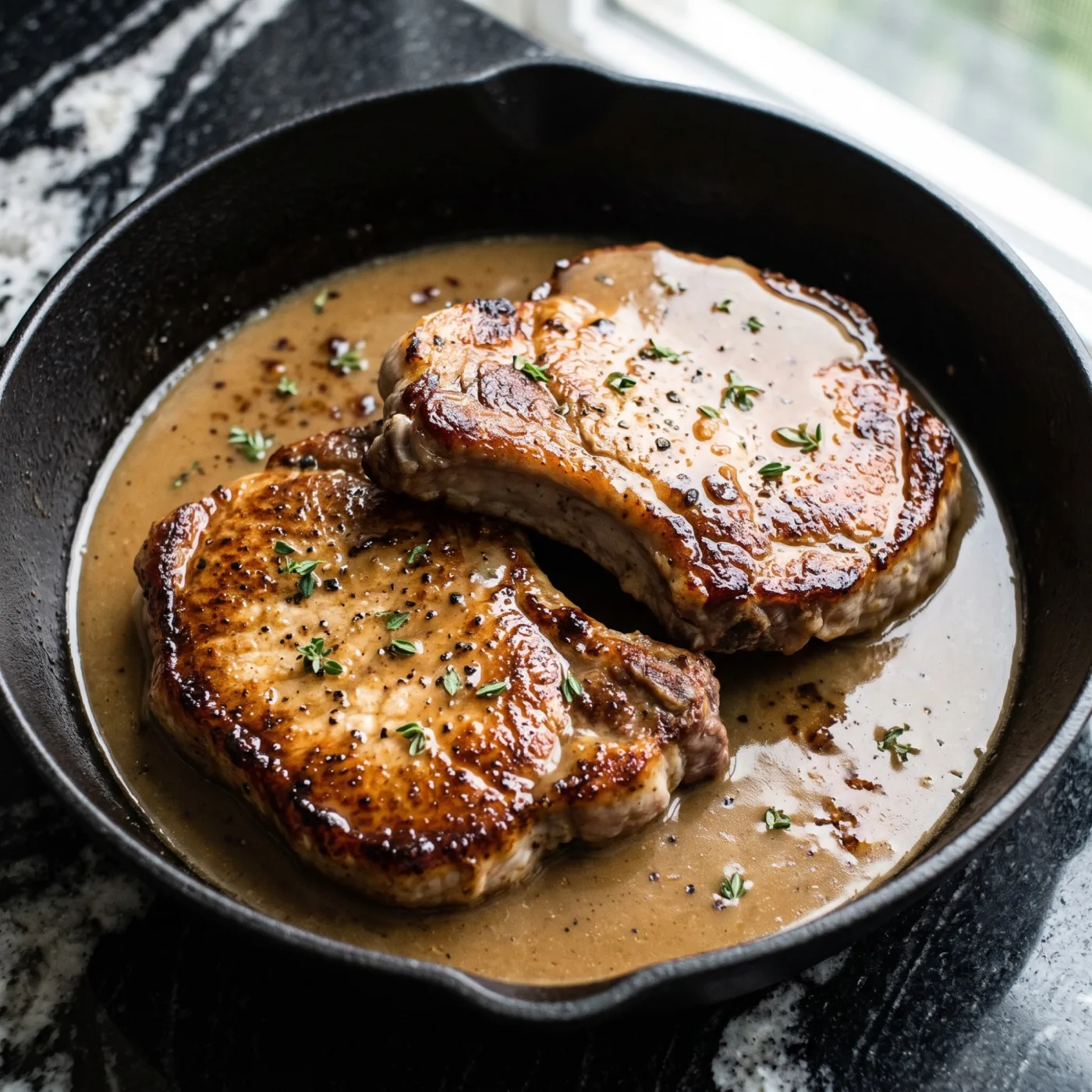
These pork chops with pan gravy for two are the kind of dinner that tastes like it took all afternoon, even though it's on the table in about 25 minutes. The chops get a deep golden sear in cast iron, rest on a plate while you make the gravy, and then everything comes back together with the gravy spooned over the top. One skillet, two plates, nothing left over.
The real trick is that the gravy is built from what the pork leaves behind. No packet, no jar, and no extra pan.
What Pan Gravy Actually Is
When meat sears in a hot pan, some of its juices stick to the bottom and turn into dark brown bits. Cooks call that the fond, and it's packed with flavor. Pan gravy simply loosens those bits with broth and thickens the result with a little butter and flour.
That's why this gravy tastes so much deeper than anything from a packet. It's made from the same pork you're about to eat. It also means the sear matters twice: a good crust on the chops gives you a good base for the gravy.
Thick-Cut, Boneless and Why It Matters
Look for boneless center-cut chops about 1 inch thick, roughly 6 to 8 ounces each. Thin chops, the half-inch kind that often come in value packs, cook through in a couple of minutes per side. That's before they've had time to brown, so you get a pale chop and a weak gravy.
Bone-in chops work too and stay a bit juicier, but they need a few more minutes and cook less evenly near the bone. If you go that way, rely on a thermometer rather than the times in the recipe.
The Dry Pork Chop Problem
Most of us grew up with tough, gray pork chops because they were cooked until no pink remained. The USDA now says pork is safe at 145°F (63°C) with a 3-minute rest, and that's what keeps it juicy. At that point the center may still look faintly blush-pink, and that's fine.
An instant-read thermometer takes all the guessing out of it. Slide it in sideways into the thickest part of the chop, away from any fat. Pull the chops off the heat right at 145°F. They rest on a plate while the gravy cooks, which covers the resting time without any extra waiting.
Searing in Cast Iron
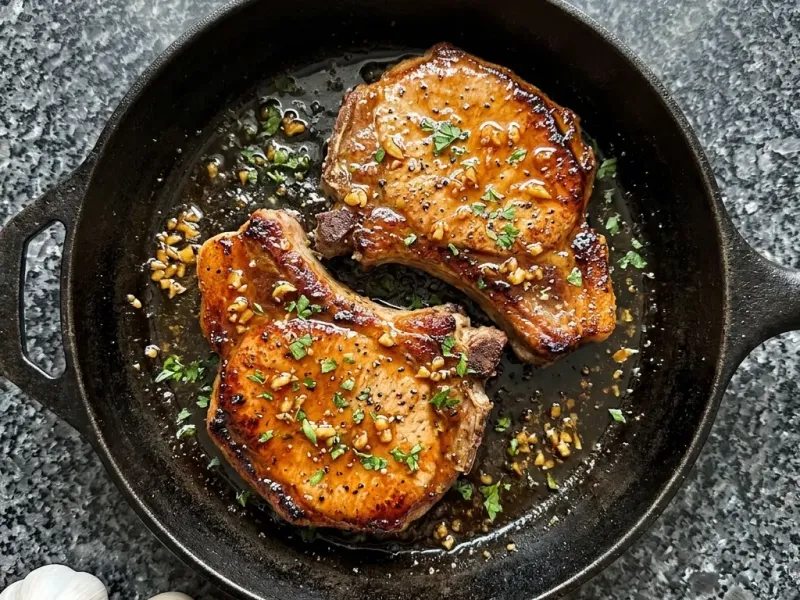
Give the skillet about 3 minutes over medium-high before the oil goes in, so it heats evenly all the way across. Pat the chops dry, lay them in, and leave them alone for 4 minutes. They'll stick at first and then release once the crust has formed. If you have to pry, they're not ready.
After the flip, drop the heat to medium. The second side doesn't need the same blast of heat, and the lower temperature keeps the bottom of the pan from scorching. Burnt bits make bitter gravy, while deep brown bits make a great one.
Building the Gravy in Four Minutes
This part moves quickly, so have the butter, shallot, flour and broth right next to the stove.
First, pour off most of the fat, leaving about a teaspoon. Then the butter and shallot go in over medium-low heat. The flour follows and cooks for a full minute. That minute matters: raw flour tastes pasty, and a short toast fixes it.
Then pour in the broth slowly, whisking as you go and scraping the bottom of the pan. Within a couple of minutes the gravy turns smooth, glossy and noticeably thicker. A little Dijon and dried thyme round it out. Finally, tip in the juices that collected under the resting chops, because they're pure flavor.
How Thick Should the Gravy Be?
You want it to coat the back of a spoon and leave a clear line when you run a finger through it. Remember it thickens a little more as it cools on the plate. If it looks just slightly loose in the pan, it will be perfect by the time it reaches the table.
If the Gravy Goes Wrong
- Lumpy: the broth went in too fast. Keep whisking hard for 30 seconds and most lumps will melt away. If any stubborn ones remain, press the gravy through a small strainer.
- Too thick: whisk in broth or water, a tablespoon at a time.
- Too thin: let it simmer another minute or two. It thickens fast.
- Tastes flat: add a pinch of salt first, then a little more Dijon or a squeeze of lemon.
- Tastes bitter: the fond burned during the sear. Next time, lower the heat after the flip.
Sides for Pork Chops with Pan Gravy for Two
Anything that soaks up gravy belongs here. Mashed potatoes are the obvious match, but buttered egg noodles, white rice or a soft dinner roll work just as well. For something green, try roasted green beans, steamed broccoli or a crisp salad with a sharp vinaigrette to cut through the richness.
If you want a drink, a dry hard cider or a light Pinot Noir pairs nicely with pork. Unsweetened iced tea with lemon is just as good.
If a Chop Is Left Over
Store the chop and gravy separately in the fridge for up to 3 days. Reheat the gravy in a small pan with a splash of broth, whisking until smooth. Slice the chop and warm it in the gravy for a minute or two, just until heated through. The microwave dries pork out quickly, so keep it short if you use it.