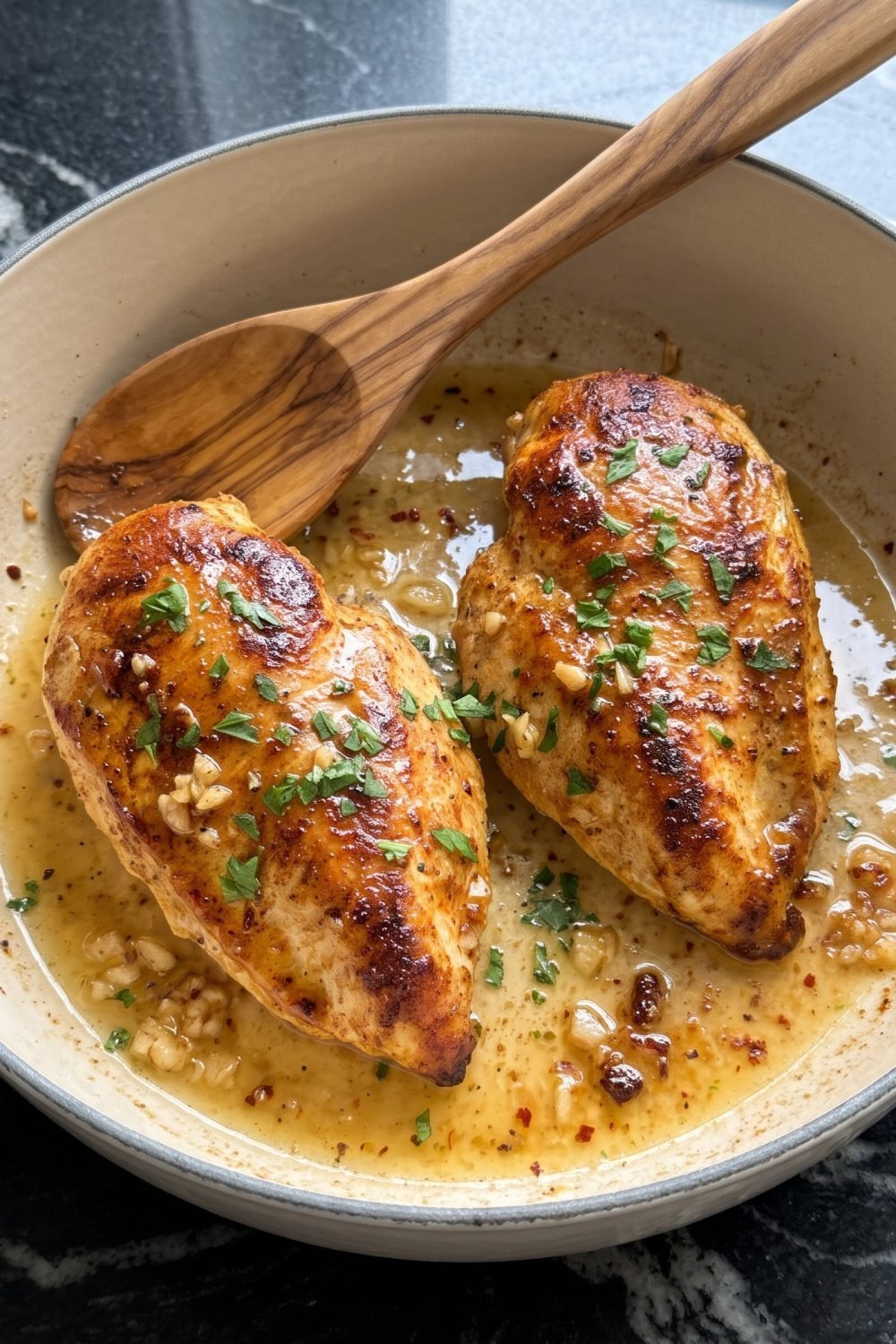
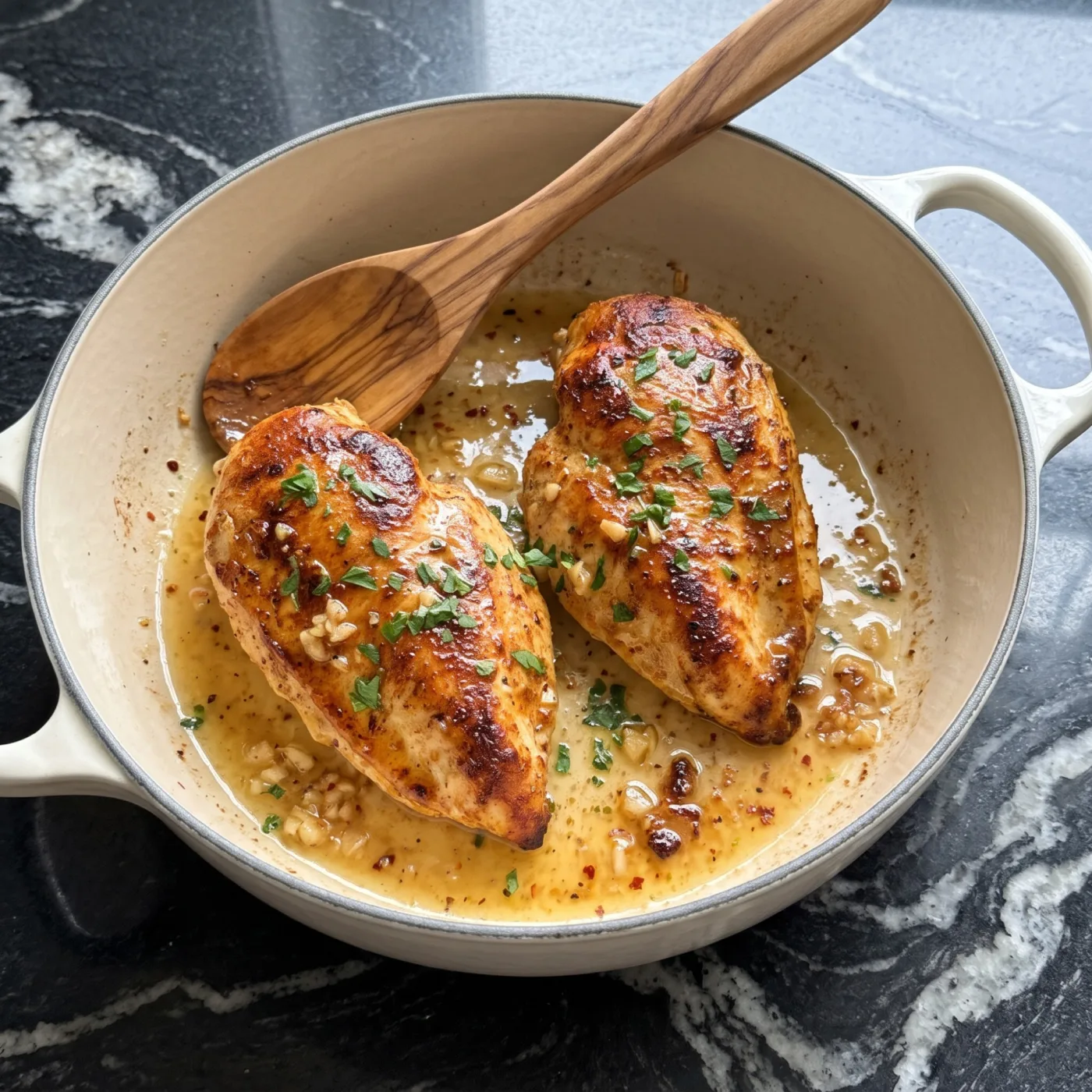
This garlic butter chicken for two is the recipe I'd hand to anyone who says chicken breasts always come out dry. Two breasts get flattened to an even thickness, seared until deep golden in a heavy Dutch oven, then bathed in a quick sauce of butter, garlic, a splash of broth and fresh lemon. The chicken is juicy all the way through, the sauce is glossy and bright, and the whole thing takes less than 30 minutes.
It's simple enough for a first-time cook and good enough for a night when you want dinner to feel a bit special.
Pound It Even First
A chicken breast is shaped like a teardrop: thick at one end, thin at the other. Cook it as it comes, and the thin end dries out long before the thick end reaches a safe temperature. That's the real reason so many chicken breasts turn out tough.
The fix takes two minutes. Put the breasts in a zip-top bag or between two sheets of plastic wrap and gently pound the thick end with a meat mallet, a rolling pin or the bottom of a heavy saucepan until the whole breast is about 3/4 inch (2 cm) thick. You're not trying to make it paper-thin, just even. Even thickness means even cooking, and even cooking means juicy chicken.
Why a Dutch Oven for Chicken Breasts?
A Dutch oven isn't the first pan most people grab for chicken breasts, but a 3.5-quart one is surprisingly good at it. The heavy base holds heat steadily, so the chicken keeps sizzling instead of cooling the pan down. The tall sides catch most of the butter splatter, which your stovetop will thank you for. And the bottom is just wide enough for two breasts in one layer.
Two things to know. Enameled cast iron heats slowly, so give it a full 3 minutes over medium-high before the oil goes in. And the chicken will stick at first. That's normal. Leave it alone, and once a golden crust forms, it lets go on its own.
Juicy Chicken Comes Down to One Number
That number is 165°F (74°C), the safe internal temperature for chicken. An instant-read thermometer is the single best tool for cooking chicken breasts. Slide it in sideways into the thickest part. When it reads 165°F, the chicken is done, and every minute after that just dries it out.
No thermometer? Cut into the thickest part: the juices should run clear and the meat should be white all the way through, with no pink or glassy center. But honestly, a basic thermometer costs less than a pack of chicken and takes away all the guessing.
Building the Garlic Butter Sauce
Once the chicken comes out, the pot holds a thin layer of browned bits, and that's where the sauce gets its flavor. Turn the heat down before the butter goes in. Butter burns quickly over high heat, and garlic even faster.
When the butter melts and starts to foam, add the garlic and stir for about 30 seconds, just until it smells sweet and fragrant. Then pour in the broth and lemon juice and scrape the bottom of the pot. The sauce bubbles up, picks up all those browned bits, and reduces in about 2 minutes into something glossy enough to coat a spoon. The chicken goes back in, you spoon the sauce over it a few times, and dinner is ready.
Breasts or Thighs?
Breasts are leaner and slice neatly, which is why this recipe uses them. Boneless, skinless thighs work just as well and are more forgiving, since their extra fat keeps them juicy even if they go a minute too long. They don't need pounding, but they take a few minutes longer per side. Thighs are also usually a little cheaper.
Cooking Garlic Butter Chicken for Two the First Time
If you're new to cooking, this is a great recipe to start with. A few things make it go smoothly:
- Get everything ready first. Mince the garlic, juice the lemon and measure the broth before the chicken goes in. The sauce comes together in under 3 minutes.
- Pat the chicken dry. A dry surface browns; a wet one steams.
- Don't move the chicken. Let it sit for the full 5 to 6 minutes on the first side to build a crust.
- Use a thermometer. It's the difference between "I think it's done" and knowing it is.
Low-Carb Plates and Other Sides
On its own, this chicken is very low in carbs, so it fits easily into a low-carb dinner. Serve it with mashed cauliflower, roasted green beans or a big green salad, and spoon the extra sauce over the vegetables.
If carbs aren't a concern, it's lovely with mashed potatoes, buttered rice or a small pile of angel hair pasta tossed in the leftover garlic butter. A glass of crisp white wine or sparkling water with lemon finishes it off.
Slicing Leftovers for Lunch
If any chicken is left, store it in the fridge with the sauce for up to 3 days. Cold sliced chicken is excellent in a salad or a wrap the next day. To reheat, warm it gently in a covered skillet with a splash of water over medium-low heat, just until heated through, so it doesn't dry out.
On weeknights I always mince the garlic and squeeze the lemon before I even heat the pot, because once the chicken comes out, the sauce is ready in about two minutes. A pinch of red pepper flakes in the butter is my favorite addition. And I never pour the leftover sauce away; it goes straight onto whatever vegetable is on the plate.