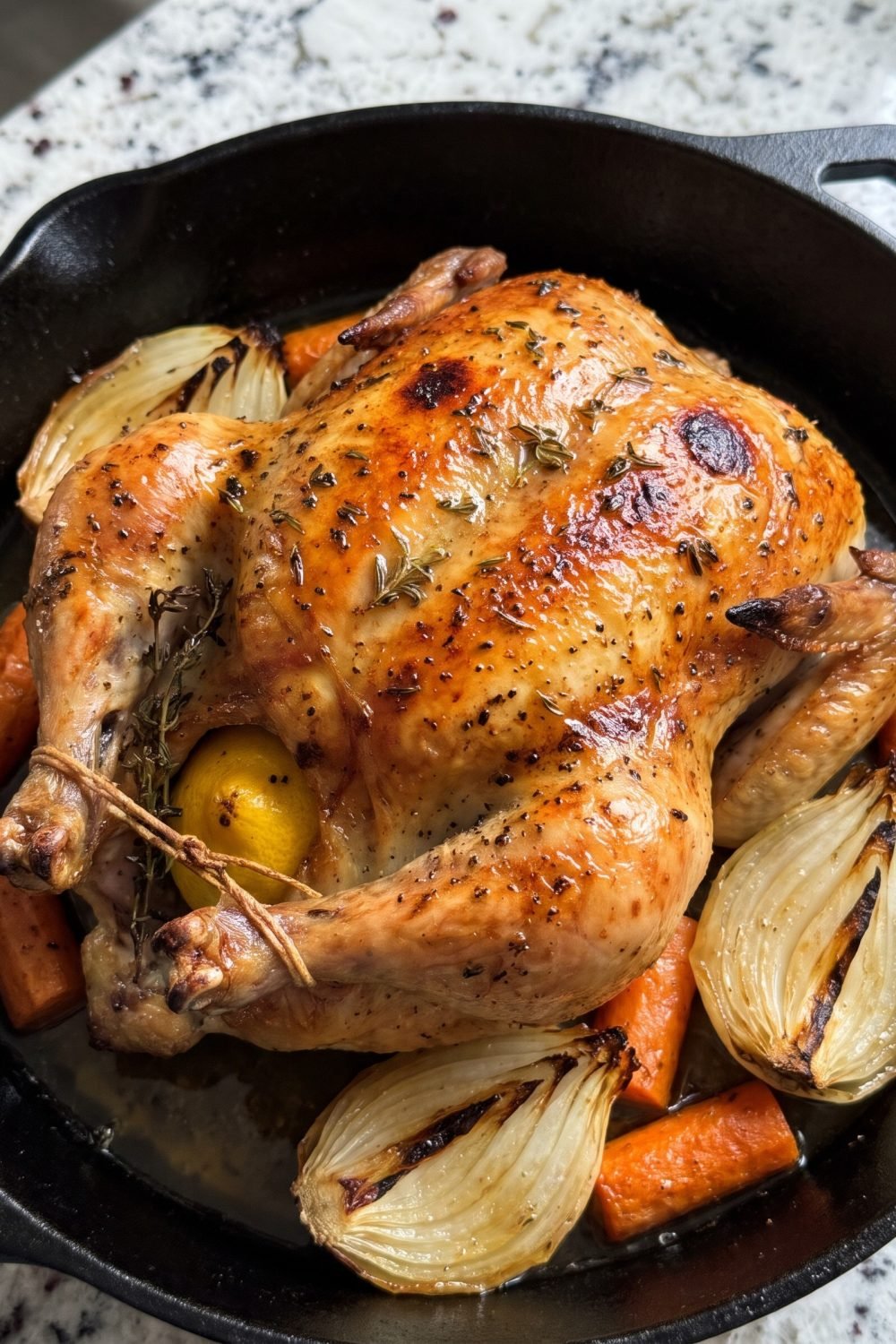
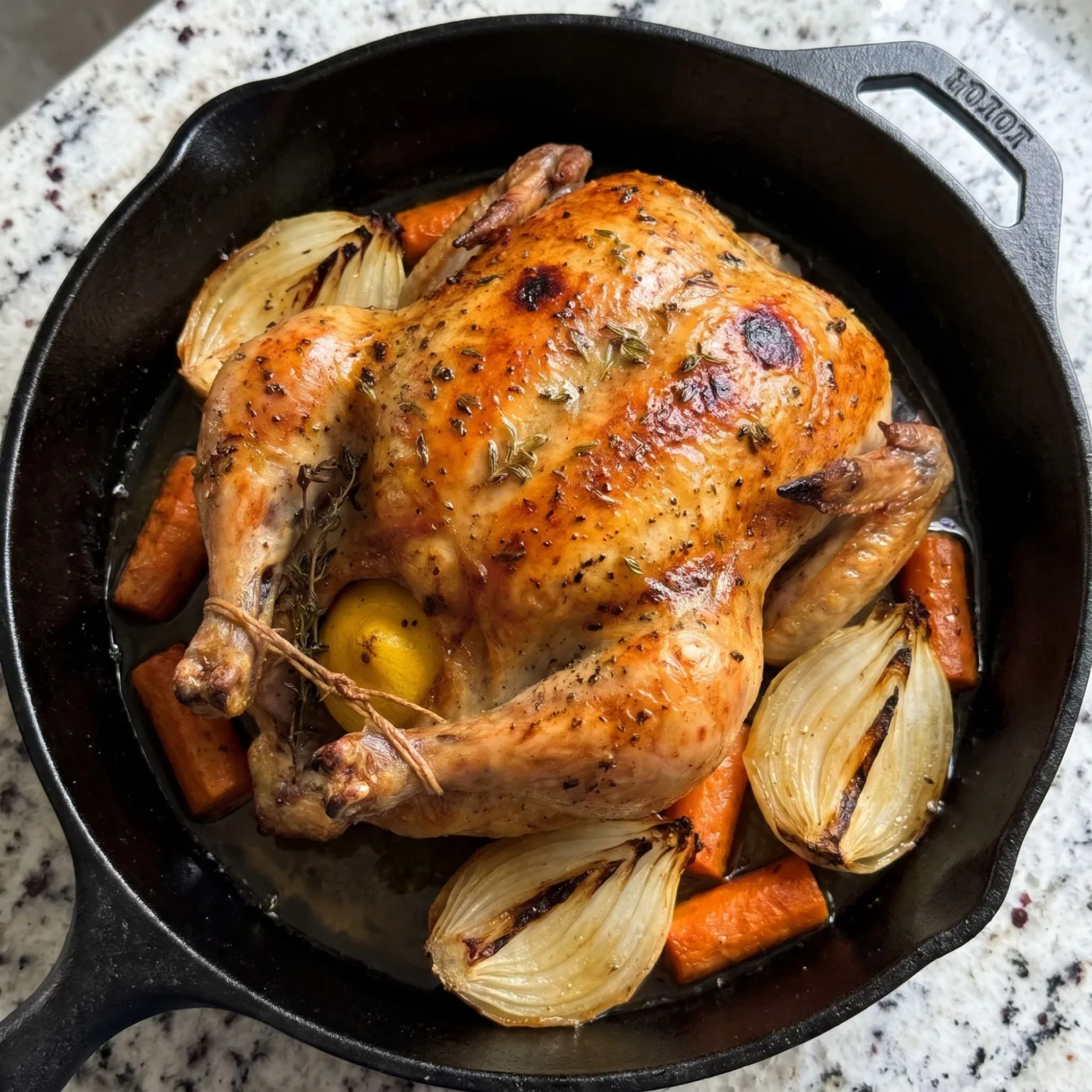
This roast chicken for two is everything you love about a big holiday roast, without the giant bird and a week of leftovers. A small whole chicken gets rubbed with herb butter, stuffed with lemon and garlic, and roasted in a cast-iron skillet on a bed of onion and carrots. It comes out with crisp, golden skin, juicy meat and a pan full of savory juices to spoon over everything.
It's simple enough for a Sunday and special enough for Christmas Day.
Choosing a Chicken Small Enough for Two
Most supermarket chickens weigh 4 to 5 pounds, which is a lot of chicken for two people. Look for the smallest whole chicken you can find, ideally about 3 pounds. It fits neatly in a 10-inch skillet, roasts in about an hour, and gives two generous servings, usually with a little breast meat left for a sandwich the next day.
If your store only has larger birds, ask at the meat counter. Many stores keep smaller chickens in the back, especially around the holidays.
Dry Skin Is Crisp Skin
Crispy skin comes down to one thing: how dry it is when it goes into the oven. Moisture on the surface has to evaporate before the skin can brown, so pat the chicken very dry with paper towels, inside and out.
If you can plan ahead, try this trick. Season the chicken with salt the day before, set it on a plate and leave it uncovered in the fridge overnight. The salt seasons the meat more deeply, and the cold air dries out the skin. The next day, it roasts up even more golden and crackly.
Butter on the Skin, Lemon Inside
A thin coat of softened butter mixed with thyme helps the skin brown evenly and adds flavor. Rub it all over, then season generously with salt and pepper.
Inside the bird, half a lemon, a few smashed garlic cloves and some herb sprigs gently perfume the meat from within as it roasts. They don't make the chicken taste strongly of lemon. They just make it smell and taste fresher. Save the other lemon half to squeeze into the pan juices at the end.
Why Roast It in a Skillet
A cast-iron skillet holds steady, even heat, which helps the bottom and sides of the chicken brown. The thick wedges of onion and chunks of carrot underneath act like a roasting rack, lifting the bird so hot air reaches all of it. They also catch the drippings and turn sweet and caramelized.
A splash of broth in the pan keeps those drippings from burning, so you end up with flavorful juices instead of blackened bits.
Tie the Legs
Tying the legs together with a short piece of kitchen string keeps the chicken compact, so it cooks evenly and the breast doesn't dry out before the thighs are done. It also looks much neater on the table. Just cross the ends of the drumsticks and tie them tightly. Tuck the wing tips underneath the bird so they don't burn.
No string? The chicken will still be delicious. The legs will just splay out a little more.
Two Temperatures, One Bird
Here's the tricky part of roasting any whole chicken: the breast and the thighs are done at different temperatures. The breast is lean and is ready at 165°F (74°C). The thighs have more connective tissue and taste best at 175°F (79°C), when they're tender and juicy.
Check both with an instant-read thermometer. Insert it into the thickest part of the breast, then into the thigh near the joint, without touching the bone. When the thigh reaches 175°F, the breast is usually right around 165°F. If the skin browns too quickly before then, lay a loose piece of foil over the top.
Let It Rest Before Carving
Give the chicken a full 15 minutes on a cutting board before carving. The juices settle back into the meat, the temperature evens out, and it becomes much easier to carve neatly. Use that time to skim the fat from the pan juices and squeeze in the reserved lemon.
Carving for Two
You don't need to carve a whole chicken perfectly. Cut through the skin between each leg and the body, then pull the leg away and cut through the joint. Slice down along one side of the breastbone and ease the breast meat off in one piece, then repeat on the other side. Each person gets a leg and a breast, served with the roasted vegetables and pan juices.
Roast Chicken for Two at Christmas
For a smaller Christmas dinner, a roast chicken is easier and much more realistic than a whole turkey. Roasted potatoes, glazed carrots, a simple green vegetable and some cranberry sauce turn it into a proper holiday spread.
Plan your timing backward from when you want to eat. The chicken needs about an hour in the oven and 15 minutes to rest. That resting time is perfect for finishing the potatoes and warming the sides. If you'd like a steak dinner for a different kind of celebration, our pan-seared ribeye is ready in under half an hour.
Leftovers
If there's some breast meat left, keep it in the fridge for up to 3 days. It makes excellent sandwiches, chicken salad or a quick soup. Save the carcass too. Simmer it with an onion, a carrot and some water for an hour, and you'll have a small batch of homemade broth. For another cozy roast-style dinner with very little effort, try our slow cooker pot roast.
My oven runs a little hot, and at the 50-minute mark the breast was already close to 165°F while the thighs still needed a few more minutes. A loose piece of foil over the breast for the last stretch kept it juicy. I also learned to pat the skin dry a second time just before buttering it, because a little moisture seeps out while the oven heats.