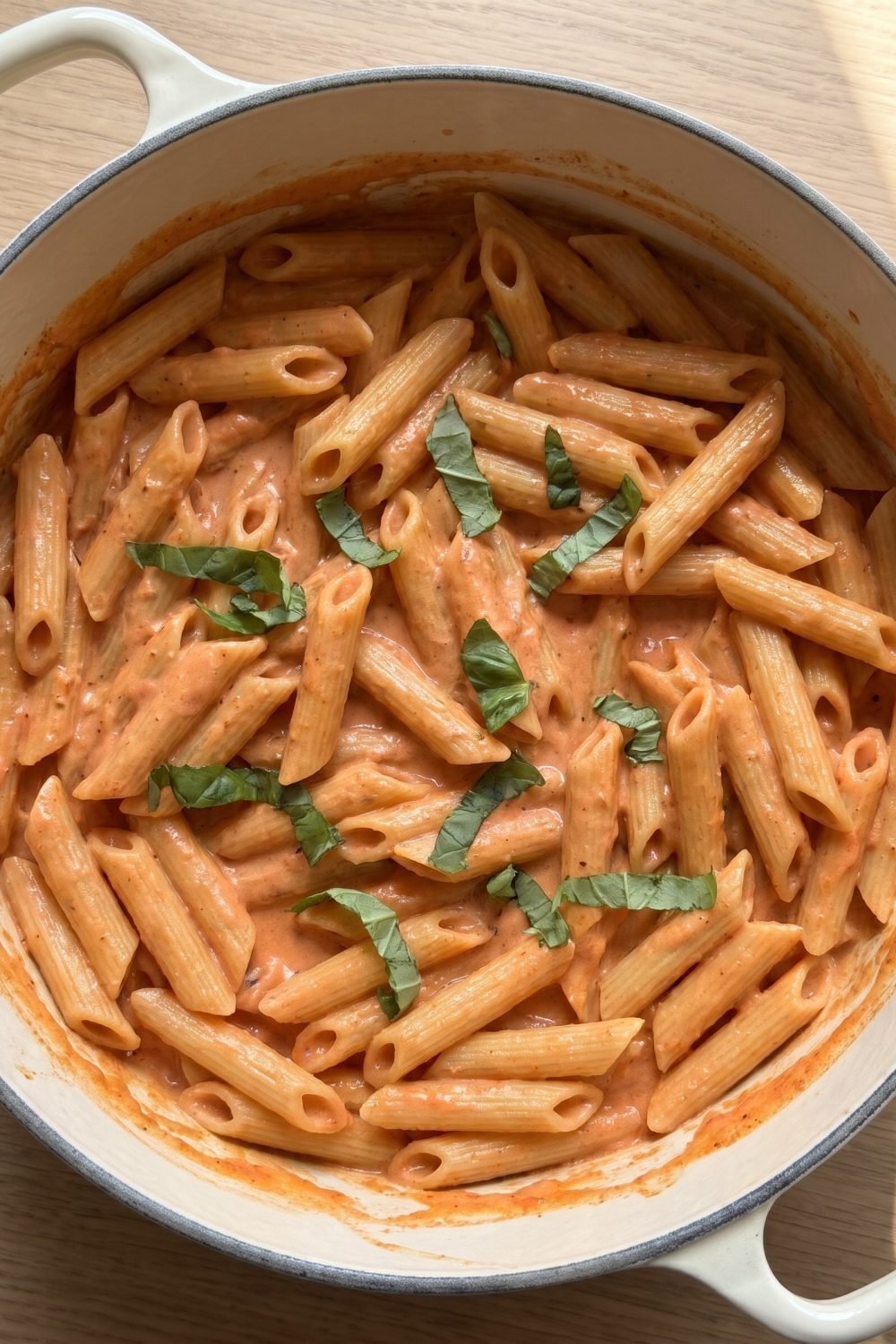
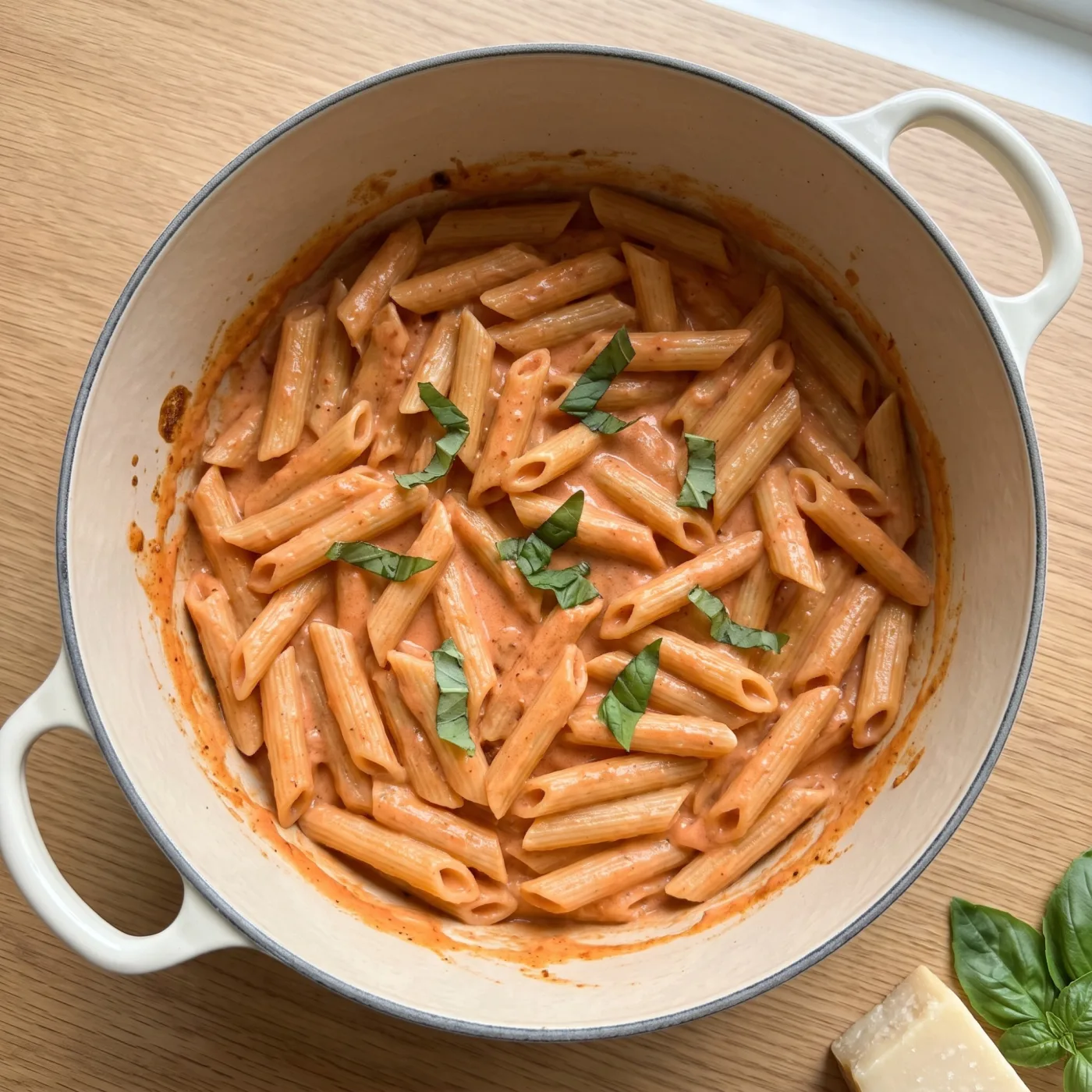
This one-pot creamy tomato pasta for two is what I make on nights when the fridge is nearly bare but the pantry isn't. Onion and garlic soften in a small Dutch oven, a can of crushed tomatoes and some broth go in, and then the dry pasta cooks right in that sauce. At the end, a splash of cream and a handful of Parmesan turn everything silky and rose-colored.
There's no colander and no second pot. It's ready in under 30 minutes and makes two generous bowls.
Pasta That Cooks in Its Own Sauce
When pasta cooks in a big pot of water, the starch it releases goes down the drain. When it cooks in the sauce, that starch stays in the pot and thickens everything. That's why this sauce turns creamy with only a little cream. The pasta also soaks up tomato and garlic flavor as it softens, instead of tasting like plain boiled pasta with sauce spooned over it.
The trick is getting the amount of liquid right. There has to be enough broth and tomato to cook the pasta through, but not so much that you end up with soup. This recipe is balanced for 6 ounces of pasta in a 3.5-quart pot, which is about the most a small Dutch oven can handle while still cooking evenly.
The Right Pasta Shape
Short, sturdy tubes work best. Penne and rigatoni hold up well to stirring, cook evenly in a small pot and catch the sauce inside. Shells and fusilli are good too.
Skip long pasta like spaghetti, which doesn't fit flat in a small pot and clumps together. Avoid very small shapes like orzo or ditalini as well, since they cook so quickly that the sauce doesn't have time to thicken. If you use rigatoni, plan on a couple of extra minutes.
Crushed Tomatoes, Not Diced
Crushed tomatoes have the right texture for this sauce: smooth enough to coat the pasta, with a few small pieces for body. Diced tomatoes stay in firm chunks, because they're usually treated to hold their shape. Whole tomatoes work if you crush them well by hand first.
A spoonful of tomato paste, cooked for a minute with the garlic, makes the tomato flavor deeper and slightly sweet. It's a small step that makes a quick sauce taste like it simmered all afternoon.
Stir More Than You Think
Pasta settles to the bottom of the pot as it cooks, and tomato sauce sticks and scorches easily. Give it a good stir every couple of minutes, scraping along the bottom with a wooden spoon or spatula. Keep the lid slightly ajar so some steam escapes and the sauce thickens.
If the sauce gets too thick before the pasta is tender, add a splash of hot water or broth and keep going. If it's still loose when the pasta is ready, simmer it uncovered for another minute.
When to Add the Cream
Cream and tomatoes can separate if they boil together, because of the tomatoes' acidity. So turn the heat off before the cream goes in. The sauce is still hot enough to warm it through, and it blends into a smooth, rosy sauce in about a minute of stirring. Add the Parmesan at the same time, stirring until it melts.
Let the pot sit for a minute or two before serving. The sauce keeps thickening as it cools slightly, and it'll cling to every piece of pasta.
One-Pot Creamy Tomato Pasta for Two, Made Your Way
This is an easy base to build on:
- Greens. Stir two handfuls of baby spinach into the hot pasta right after the cream.
- More protein. Add a drained can of white beans with the pasta, or top it with leftover chicken.
- More heat. Use a generous pinch of red pepper flakes, or add a little chili crisp at the table.
- Roasted red peppers. A few chopped jarred peppers stirred in with the tomatoes make the sauce sweeter and smokier.
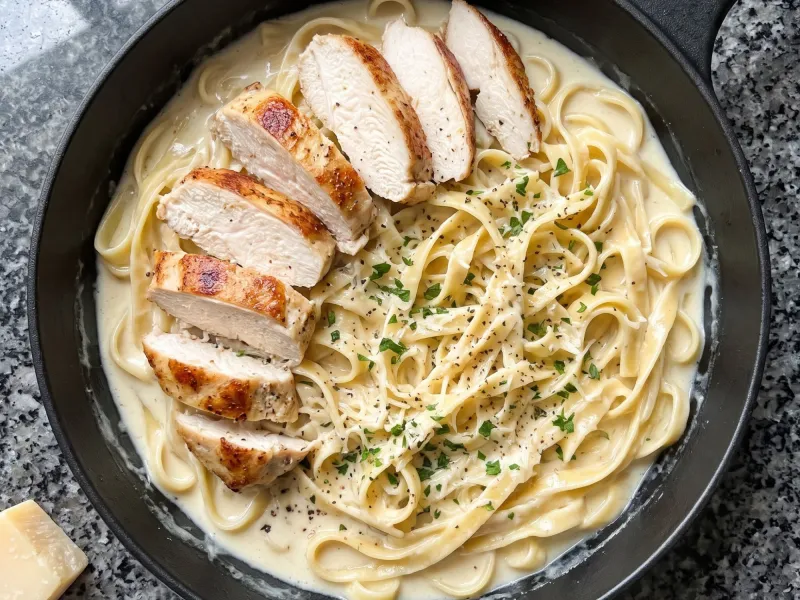
If you love pasta cooked right in the sauce, our chicken alfredo uses the same one-pan method with a creamy Parmesan sauce.
Is It Vegetarian?
Almost. The pasta, vegetables and broth are all meat-free. The only thing to check is the cheese. Traditional Parmigiano-Reggiano is made with animal rennet, so strict vegetarians should look for a vegetarian Parmesan-style hard cheese, which most grocery stores now carry. Use vegetable broth, not chicken, and the whole dish is fully vegetarian. You'll find more meatless ideas among our vegetarian recipes for two.
Leftovers
Keep any leftovers in the fridge for up to 3 days. The pasta soaks up more sauce as it sits, so reheat it in a pot or skillet over medium-low heat with a splash of water or broth, stirring until creamy again. In the microwave, add a little water and stir halfway through. Cream sauces don't freeze well, so this one is best enjoyed fresh.
Around the 8-minute mark, the pasta started sticking to the bottom of my pot, even though I'd stirred it a few minutes earlier. That's when it needs stirring most, as the sauce thickens. I also learned not to judge the sauce too early. It looks thin until the last few minutes, then thickens quickly once the pasta releases its starch.