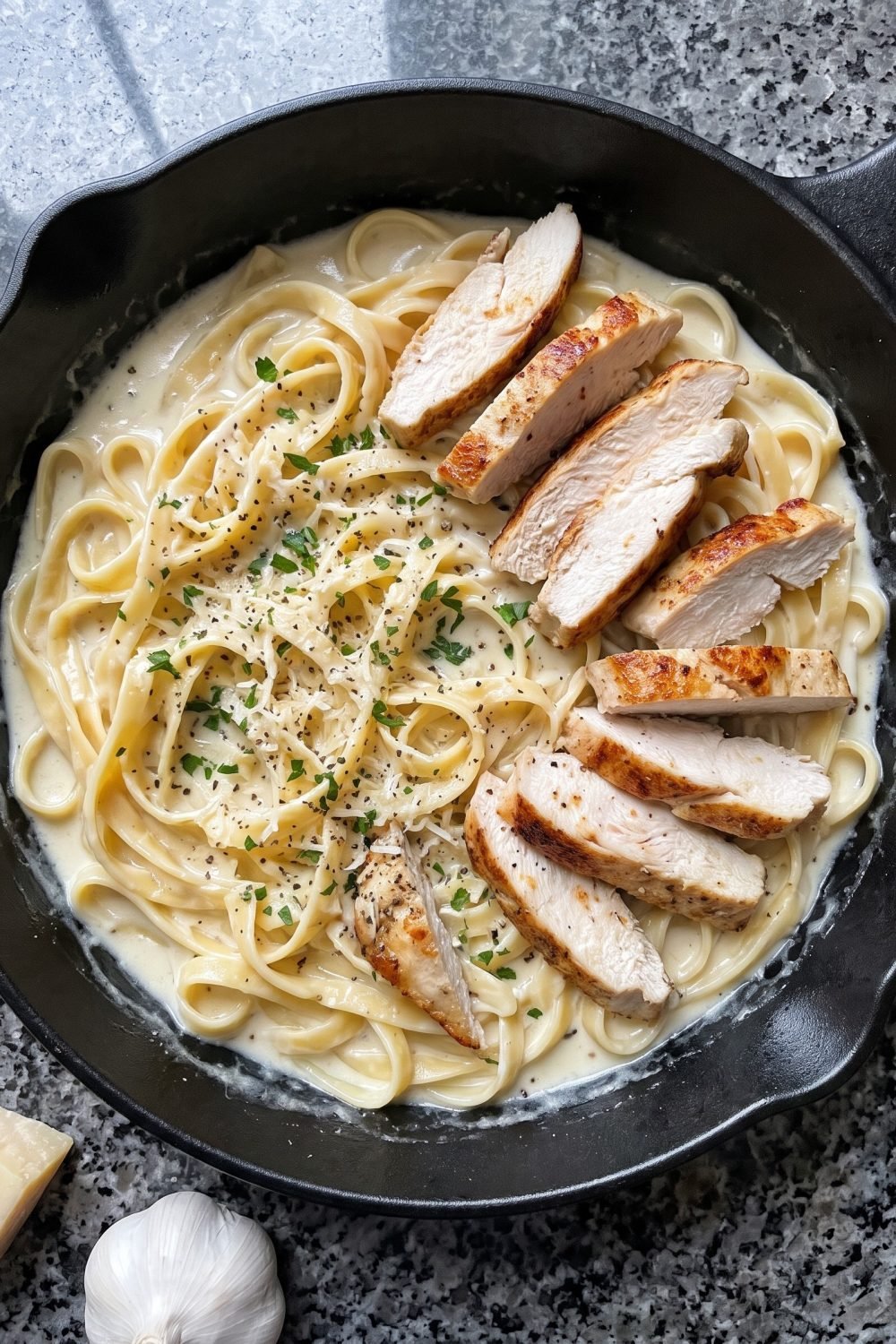
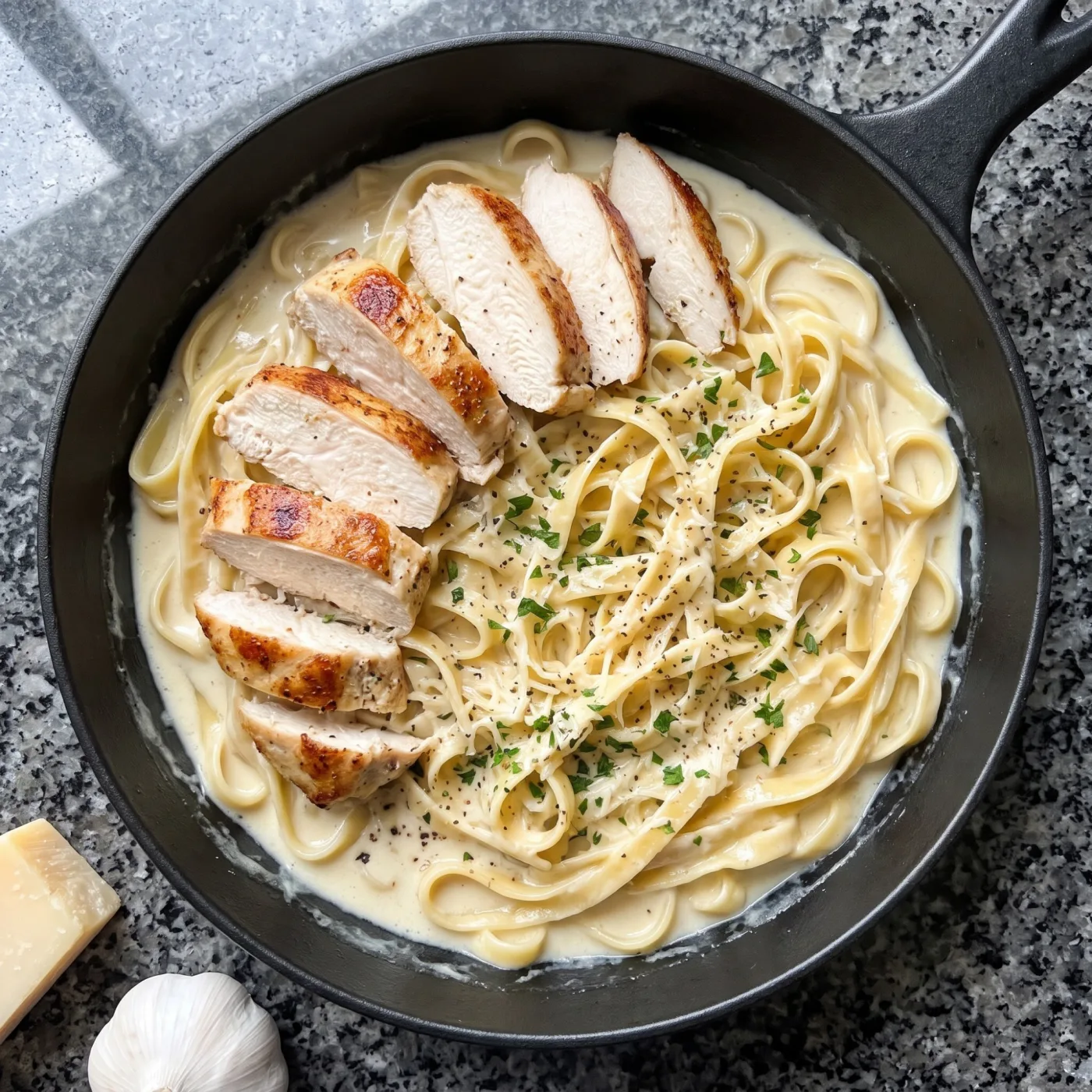
This chicken alfredo for two is the creamy, cozy pasta you'd order at a restaurant, made at home in one skillet with no separate pot of boiling water. The chicken sears first, the fettuccine cooks right in garlicky broth in the same pan, and a little cream and plenty of Parmesan turn whatever liquid is left into a glossy sauce. Then the sliced chicken goes on top.
It's rich, the way alfredo should be, but sized so there's nothing left in the pan. Dinner is ready in about 35 minutes.
One Pan, No Pasta Pot
The usual way to make alfredo uses three things: a big pot for the pasta, a skillet for the chicken, and a saucepan for the sauce. For two people, that's a lot of washing up for one plate of pasta each.
Cooking the pasta in the skillet does more than save dishes. As the fettuccine simmers in broth, it releases starch into the liquid. That starchy broth becomes the base of the sauce, so you need less cream to make it silky, and the pasta itself tastes seasoned all the way through rather than just coated.
Thin Cutlets Cook Faster and Stay Juicy
A whole chicken breast is thick at one end and thin at the other, so by the time the thick end is cooked, the thin end is dry. Slicing each breast in half horizontally gives you two even cutlets about half an inch thick. They brown nicely in 3 to 4 minutes per side and stay juicy.
To do it, lay a breast flat on the cutting board, press your palm on top, and slice through the middle with a sharp knife, parallel to the board. If that feels awkward, buy thin-sliced chicken breasts, which are already cut this way.
Pull them out at 165°F (74°C) and let them rest while the pasta cooks. By the time you slice them, the juices will have settled back in.
Cooking Fettuccine in a Skillet
Long pasta doesn't fit in a 10-inch skillet whole, so break the fettuccine in half before it goes in. Once the broth is boiling, add the pasta, press it under the liquid with tongs, and give it a stir so the strands don't clump.
Then cover the pan and turn the heat down so it simmers gently. The lid matters: without it, the liquid boils off before the pasta is cooked. Lift the lid every couple of minutes to stir, especially along the bottom, where the pasta likes to stick.
After 10 to 12 minutes the fettuccine should be tender with a little bite, sitting in a few tablespoons of thick, cloudy liquid. That cloudiness is the starch, and it's exactly what you want. If the pan looks dry before the pasta is done, add a splash of hot water and keep going.
Keeping the Sauce Smooth, Not Grainy
Parmesan is what makes alfredo taste like alfredo, and it's also what most often goes wrong. Three things keep it smooth:
- Grate it fine, from a wedge. Pre-shredded Parmesan is coated with anti-caking powder that stops it from melting, so you get little clumps instead of sauce.
- Take the pan off the heat. Cheese that hits a boiling pan tightens up and turns stringy. Let the bubbles settle first.
- Add it in handfuls. Toss with tongs after each one until it disappears, then add the next.
The cream goes in just before the cheese, over low heat, and only needs a minute to warm through. You'll see the sauce turn from thin and milky to glossy and clinging in about 30 seconds of tossing.
If the Sauce Breaks or Clumps
- Clumpy cheese: the pan was too hot. Add a tablespoon of hot water and toss hard off the heat; most clumps will melt in.
- Too thick: alfredo tightens fast as it cools. Loosen it with a splash of hot water or broth.
- Too thin: toss for another 30 seconds off the heat. The starch keeps thickening it.
- Oily on top: the sauce got too hot and the fat separated. Whisk in a spoonful of cream and keep tossing until it comes back together.
Real Alfredo vs. the American Version
The original Roman dish has no cream at all, just fresh pasta, butter and a lot of Parmesan tossed together. The creamy, chicken-topped version most of us know grew up in American restaurants. This recipe sits somewhere in between: there's cream, but only enough to make the sauce reliable, with the starchy broth and the cheese doing most of the work.
Making Chicken Alfredo for Two a Date-Night Dinner
Alfredo is one of those dishes that feels like an occasion, which makes it a natural pick for a night in. Keep the sides simple: a green salad with a sharp lemon or red wine vinaigrette cuts through the richness, and roasted broccoli or asparagus adds some color. Garlic bread is never a bad idea.
A crisp white wine like Pinot Grigio or an unoaked Chardonnay pairs well with the cream and Parmesan. Sparkling water with lemon does the same job without alcohol.
Reheating Alfredo Without Breaking It
Alfredo is at its best straight from the pan, because the sauce thickens as it cools. If you do have some left, keep it in the fridge for up to 2 days. To reheat, put it in a skillet over low heat with 2 to 3 tablespoons of milk or water and toss gently until warm and creamy again. In the microwave, stir every 30 seconds and add a splash of milk first. Freezing isn't a good idea, because the sauce turns grainy.
When I make this, I always grate a little extra Parmesan to pass at the table, plus a few grinds of black pepper. A tiny pinch of nutmeg in the sauce is my favorite small change, because it makes the cream taste richer without anyone being able to say why. And if broccoli is in the fridge, I toss a handful of small florets in with the pasta for the last 4 minutes.