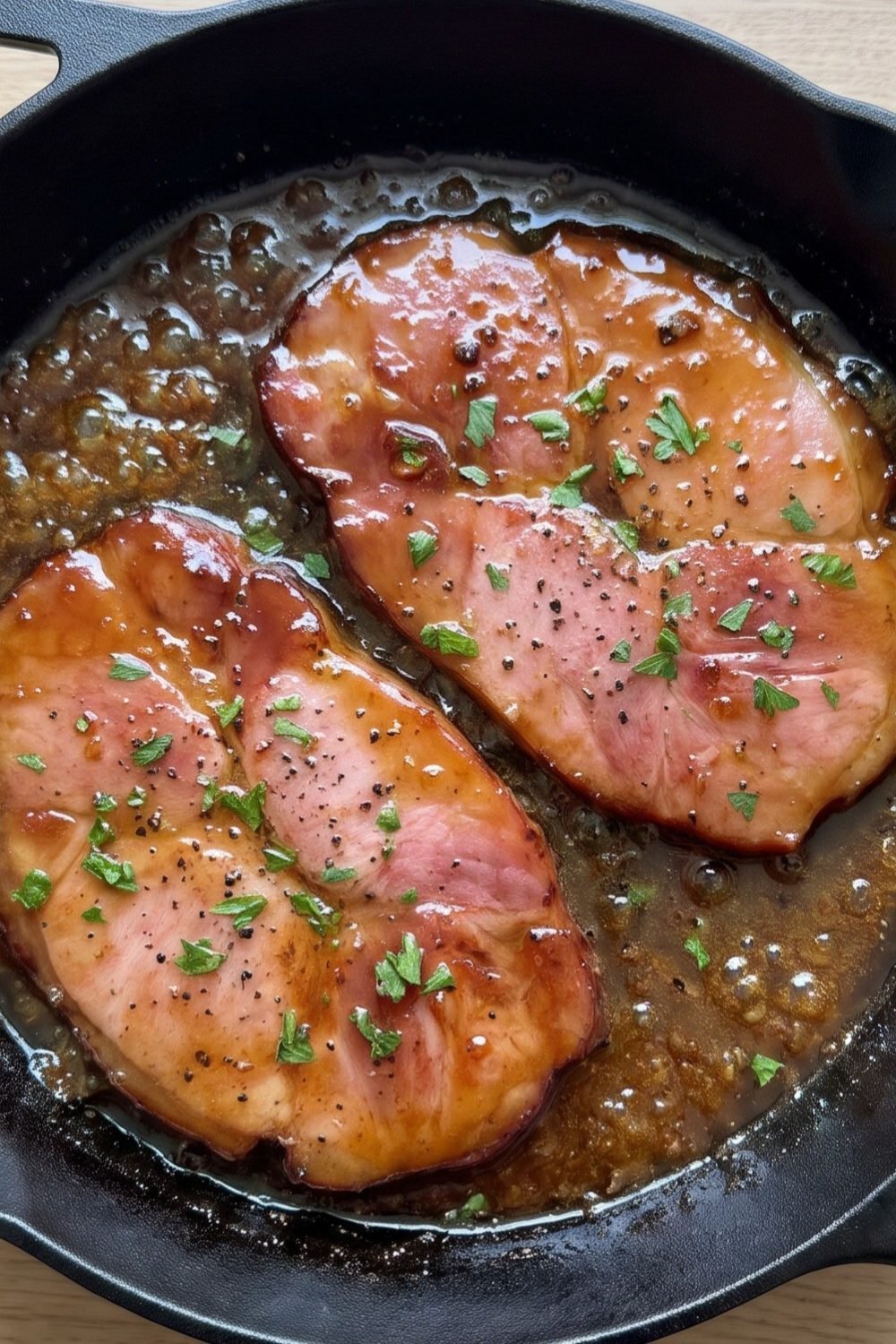
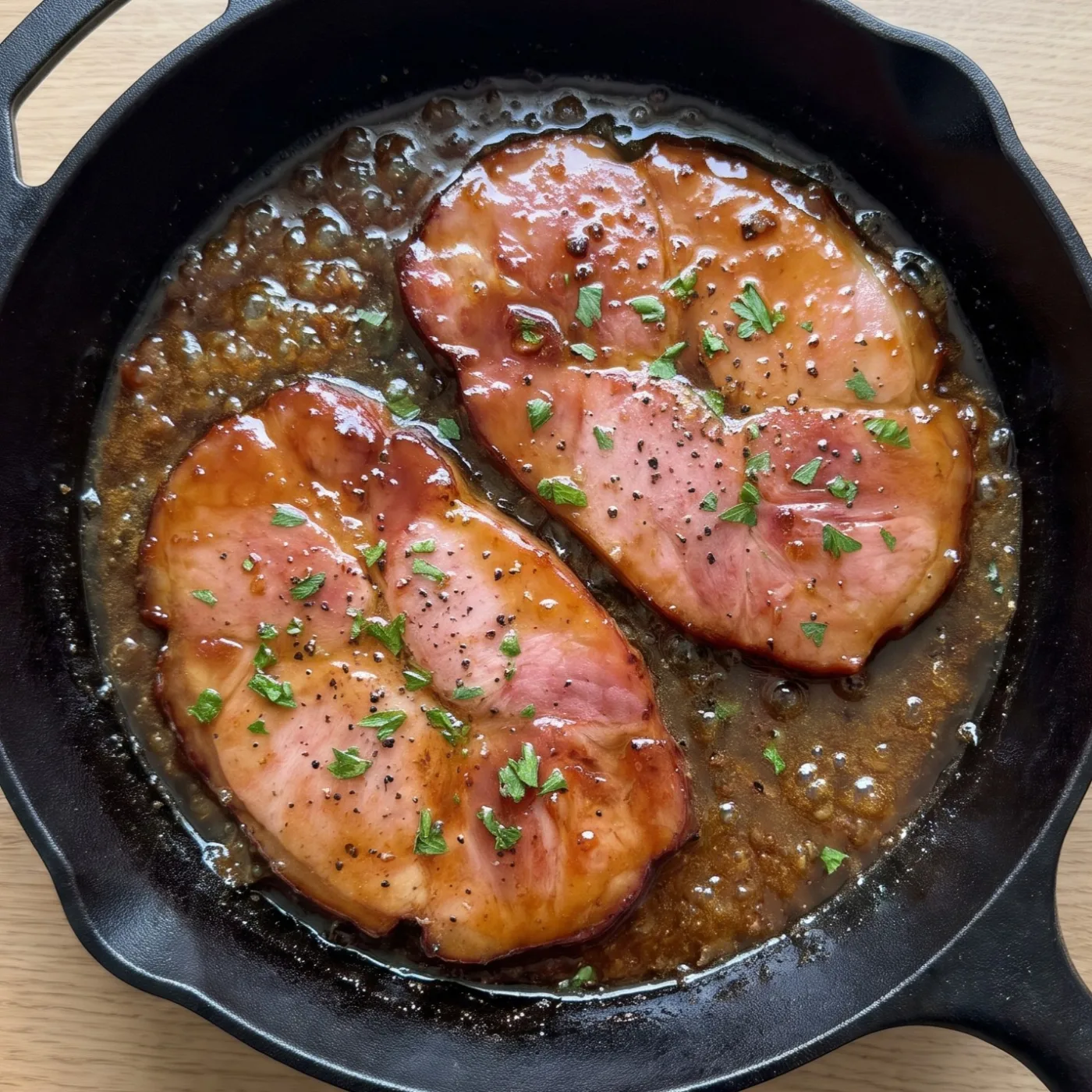
This brown sugar glazed ham steak for two gives you all the flavor of a holiday ham without a 10-pound roast and a week of leftovers. A thick slice of ham sears golden in a cast-iron skillet, then gets coated in a quick glaze of brown sugar, Dijon mustard and orange juice that bubbles down until sticky and shiny. It's on the table in about 20 minutes.
It's ideal for a small Christmas or Easter, and just as good on a regular weeknight.
What a Ham Steak Actually Is
A ham steak is simply a thick slice cut from a whole cured ham, usually about half an inch thick. Like a spiral ham, it comes fully cooked, which is why this dinner is so fast. You aren't cooking it from raw, just browning it and warming it through.
You'll find ham steaks near the bacon or in the deli section of most grocery stores. One steak weighs about a pound, which makes two generous servings.
Bone-In or Boneless?
Both work the same way in this recipe. Bone-in ham steaks have a small round bone in the middle and a little more flavor from it. Boneless ones are easier to cut and serve. Choose whichever looks thicker and more even. If the label offers a lower-sodium or "reduced salt" ham, that's worth picking up too (more on that below).
Snip the Edges So It Stays Flat
Many ham steaks have a thin rim of fat and skin around the edge. As the steak heats, that rim shrinks faster than the meat and makes the whole slice curl up like a bowl. A curled steak only touches the pan in the middle, so it browns unevenly.
The fix takes 20 seconds. Use kitchen scissors to make small cuts through the fatty edge about every inch, without cutting into the meat. The steak stays flat and browns all over.
You're Browning, Not Cooking
Because the ham is already cooked, the goal in the pan is color and warmth. Medium heat works better than high here. It gives the surface time to caramelize while the inside heats through, without drying the thin slice out.
Pat the ham dry first, so it browns instead of steaming. After about 3 to 4 minutes per side, it should be golden in spots and hot in the center. The USDA recommends reheating fully cooked ham to 140°F (60°C), and an instant-read thermometer in the thickest part tells you when you're there.
A Four-Ingredient Glaze
The glaze is what turns a simple ham steak into something festive:
- Brown sugar: Gives sweetness and that sticky, caramelized coating.
- Dijon mustard: Adds a gentle tang that balances the sugar.
- Orange juice: Loosens the glaze and adds a fresh, bright note.
- A pinch of cloves: Brings the classic holiday ham flavor.
Stir them together before you start, so the glaze is ready the moment the ham is browned.
Sugar Burns Faster Than You Think
Brown sugar caramelizes beautifully, but in a hot cast-iron skillet it can go from glossy to burnt in seconds. Lower the heat to medium-low before the glaze goes in. Pour it around the ham and spoon some over the top, then flip the steak once or twice as it bubbles. In 1 to 2 minutes, it thickens into a shiny coating.
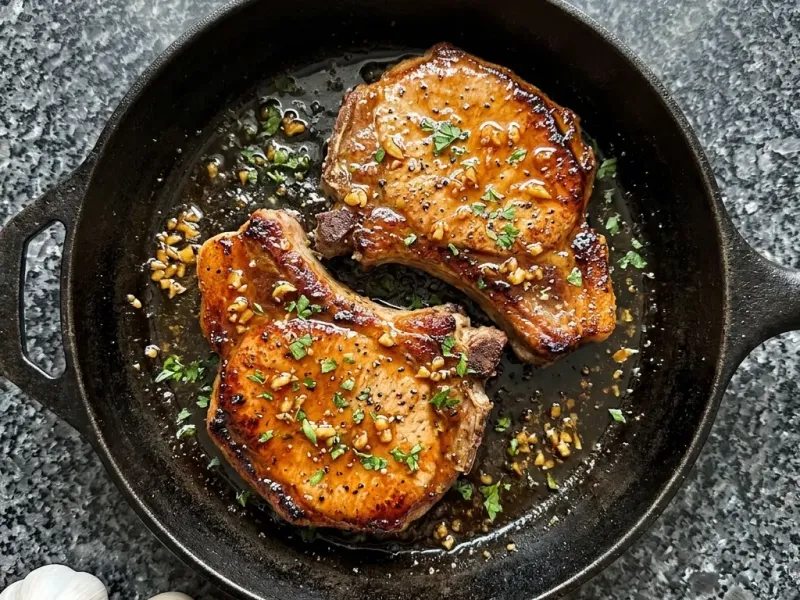
If the edges of the glaze start to smoke or turn very dark, take the pan off the heat right away. Our honey garlic pork chops use the same trick with a honey glaze.
Brown Sugar Glazed Ham Steak for Two at Christmas
A whole ham is far too much for two people, but a glazed ham steak gives you the same holiday feeling. Serve it with mashed or roasted potatoes, green beans or honey-glazed carrots, and a dinner roll. A slice of pineapple warmed in the glaze makes it look extra festive.
If you're planning a small Christmas menu and want a different main, our filet mignon for two is ready in about the same time.
A Note on Salt
Ham is cured with salt, so it's naturally very salty. One serving of this dinner has about 2,600 milligrams of sodium by our estimate, almost all of it from the ham itself. That's normal for ham, but it's worth knowing. A lower-sodium ham steak cuts that a lot. It also helps to serve it with unsalted sides like plain potatoes and steamed vegetables, so the rest of the plate stays light.
Leftovers
If any ham is left, keep it in the fridge for up to 4 days. Dice it into scrambled eggs or an omelet, tuck it into a grilled cheese, or toss it into fried rice. It's also great in a pot of split pea or bean soup.
The first ham steak I cooked curled up at the edges within a minute, because I hadn't snipped the rim. Now I always do it before the pan heats. I also found the glaze thickens faster than expected once the ham goes back in, so I keep the heat low and flip the steak as soon as the bubbles look glossy.