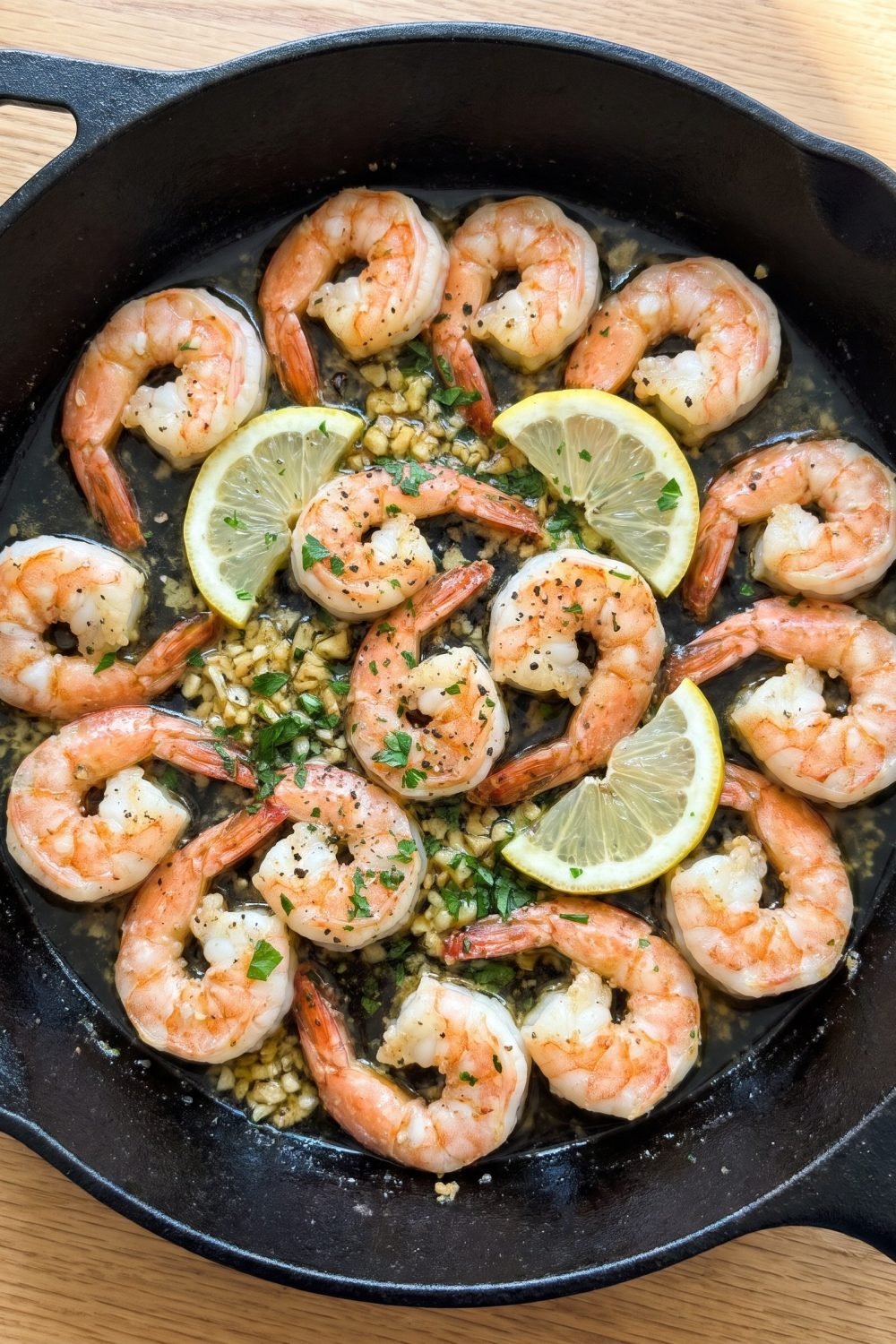
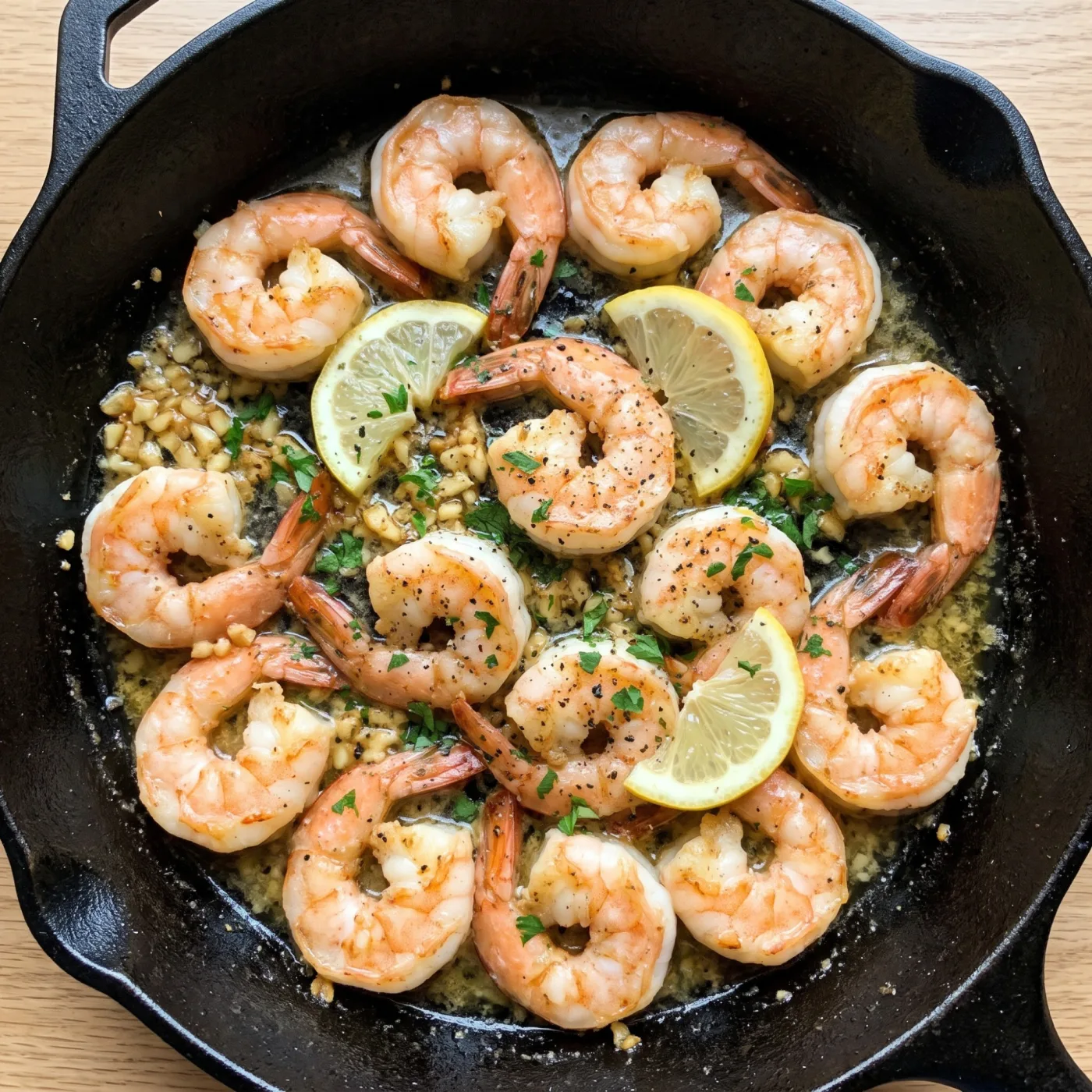
This garlic butter shrimp for two is my emergency dinner, the one I make when it's 6:45, nobody planned anything, and there's a bag of shrimp in the freezer. The shrimp get a quick sear in a hot cast-iron skillet, come out for a minute, and then go back into a pan of sizzling butter, garlic and lemon. From the moment the pan goes on the stove, dinner is about seven minutes away.
It's simple, but it doesn't taste like a shortcut. The sauce is glossy and bright, and there's always just enough of it to mop up with bread.
At a glance: about 15 minutes · one cast-iron skillet · roughly 35 grams of protein per serving (estimated) · easy, as long as you don't walk away from the pan.
Buying Shrimp for Two
Twelve ounces of peeled shrimp is the right amount for two people. Look for large shrimp, labeled 21/25 or 26/30. That number tells you how many shrimp make up a pound, so smaller numbers mean bigger shrimp. Large shrimp are meaty enough to brown a little before they cook through. Small ones turn tough before they get any color.
Frozen shrimp are completely fine, and often fresher than the "fresh" ones at the counter, which were usually frozen and thawed in the store. Buy them raw, peeled and deveined to save yourself the fiddly work. Skip anything labeled "cooked": reheated cooked shrimp go rubbery in seconds.
Tails on or off is your call. Tails look nicer on the plate; tails off are easier to eat over pasta. (In the UK and Australia, look for raw king prawns.)
Thawing Frozen Shrimp in 10 Minutes
Forgot to move them to the fridge? No problem. Put the frozen shrimp in a colander and run cold water over them for 5 to 10 minutes, tossing them now and then, until they bend easily. Don't use warm water, which starts cooking the outside while the middle is still icy.
Then comes the step most people skip: dry them really well. Spread the shrimp on paper towels and pat the tops too. Wet shrimp steam instead of searing and water down the sauce.
Why the Shrimp Come Out Before the Sauce
It's tempting to cook everything in one go, but shrimp cook in about two minutes and garlic burns in less than one. Searing the shrimp first in hot oil and a little butter gives them some color. Taking them out keeps them from overcooking while you build the sauce at a gentler heat.
Once the heat is down, the rest of the butter and the garlic go in. You want the garlic to sizzle softly and smell sweet, not to brown. A splash of wine or broth and some lemon juice loosen everything from the bottom of the pan, and the butter turns into a loose, glossy sauce. The shrimp go back in for the last 30 seconds, just long enough to finish cooking and get coated.
How to Tell When Shrimp Are Done
Shrimp give you a clear sign. Raw shrimp are gray and translucent and lie fairly straight. As they cook, they turn pink and opaque and curl into a loose C shape. When they curl tight into an O, they've gone too far and will be rubbery.
The middle is the last part to change. Cut one in half at its thickest point: it should be opaque all the way through, with no glassy center. Remember they keep cooking for a moment in the hot sauce, so it's fine to pull them from the first sear while they're still a little translucent in the middle.
Wine or Broth?
A dry white wine like Sauvignon Blanc or Pinot Grigio gives the sauce a slightly sharper, restaurant-style edge. Chicken broth makes it a bit rounder and savory. Both work, and you only need two tablespoons, so use whatever is open. If you're using broth and need the dish gluten-free, check the label, since a few brands contain wheat.
Mistakes That Make Shrimp Rubbery
- Crowding the pan. Twelve ounces fits in one layer in a 10-inch skillet. Crowded shrimp release water and boil instead of searing.
- Cooking them for "just one more minute." Shrimp go from perfect to overdone fast. Trust the C shape.
- Starting with wet shrimp. Pat them dry, every time.
- Using pre-cooked shrimp. They're already done, so heating them again only toughens them.
Turning Garlic Butter Shrimp for Two Into a Full Meal
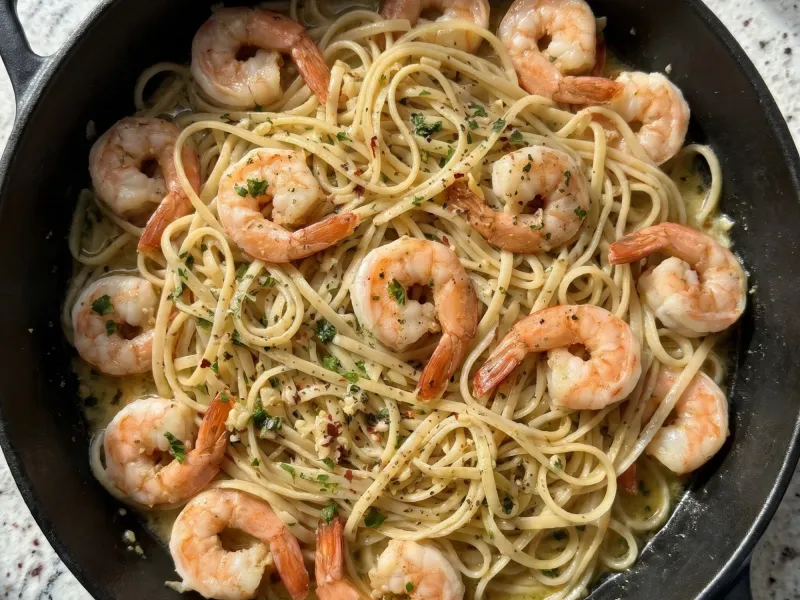
On its own it's a light, high-protein plate. To make it a fuller dinner, toss it with 4 ounces of cooked spaghetti or linguine and a splash of the pasta water, or spoon it over white rice. For a low-carb plate, serve it over zucchini noodles or with roasted asparagus. And if all you have is good crusty bread, that might be the best option of all, because the sauce is the best part.
A cold glass of the same white wine you cooked with is the natural pairing. Sparkling water with plenty of lemon works just as well.
Can You Make It Ahead?
Honestly, this one is best made right before you eat. Reheated shrimp turn tough, and the butter sauce separates. If you do have leftovers, keep them in the fridge for up to 2 days and eat them cold, tossed into a salad or a wrap. You can prep ahead, though: thaw and dry the shrimp, mince the garlic and squeeze the lemon in the morning, and dinner takes 7 minutes that night.
I always keep a bag of frozen shrimp and a lemon around just for this recipe. My favorite way to serve it is over spaghetti with an extra squeeze of lemon and a big handful of parsley. If you like heat, don't be shy with the red pepper flakes. They wake up the butter beautifully.