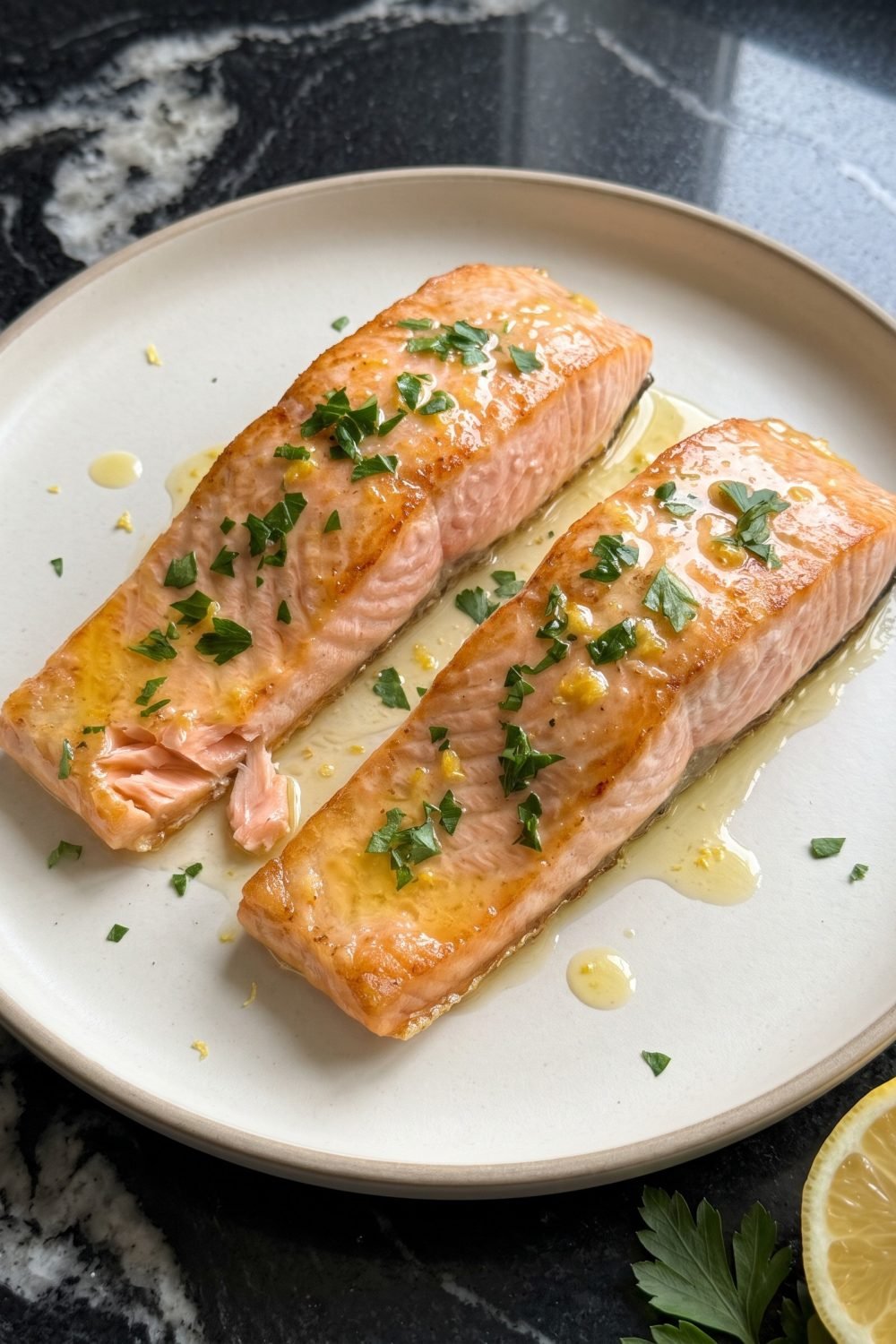
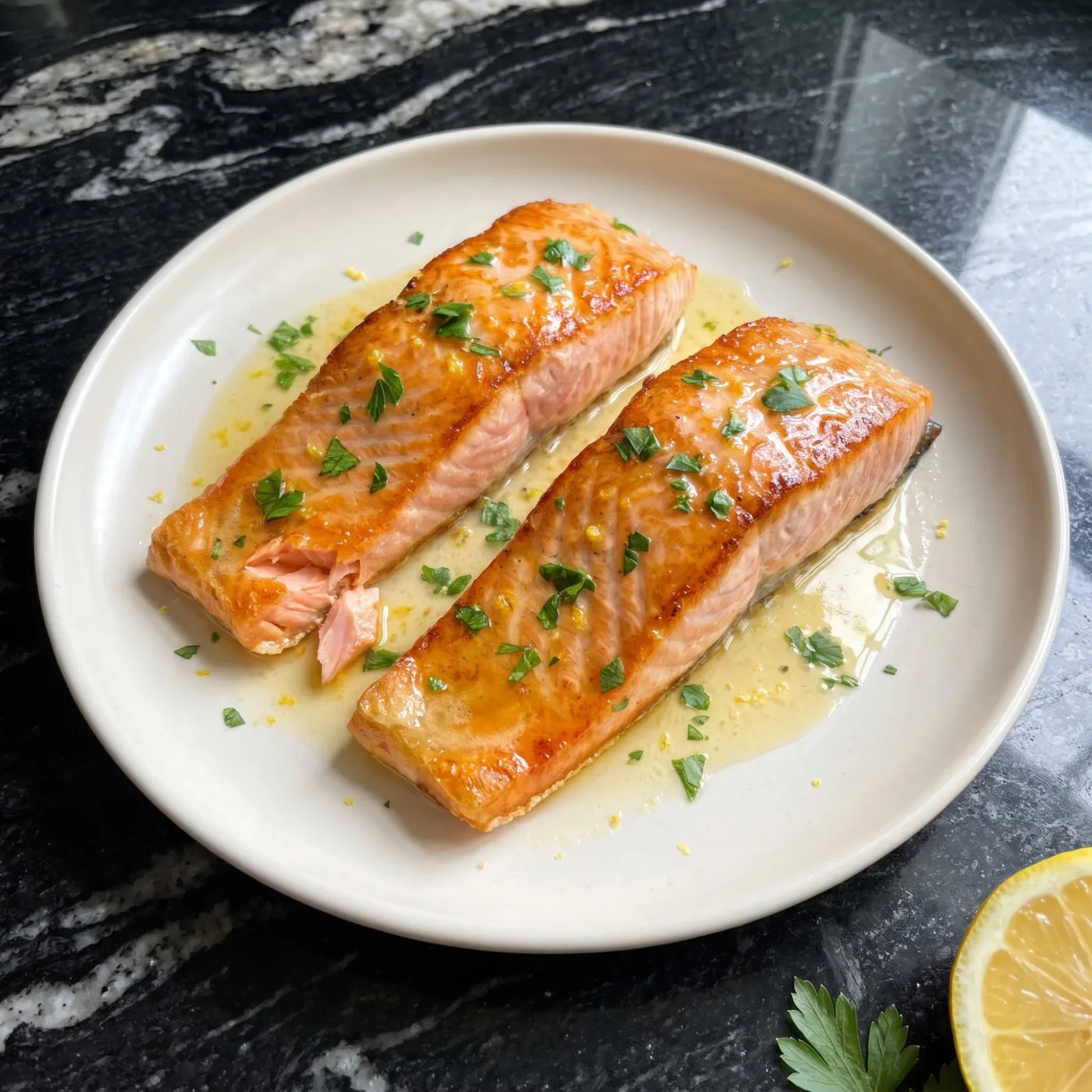
This lemon butter salmon for two is one of the fastest dinners I know that still feels special. Two salmon fillets go skin side down into a hot cast-iron skillet and stay there until the skin turns golden and crackly. After a quick flip, a little butter, garlic and fresh lemon go into the pan and get spooned over the fish until it's glossy and fragrant.
The whole thing takes about 20 minutes, uses one pan and works just as well on a Tuesday as it does for a date night.
Crispy Skin Starts With a Dry Fillet
The skin is the best part of pan-seared salmon, as long as it's crisp. Soggy, flabby skin almost always comes from moisture. So before anything else, pat the fillets completely dry with paper towels, especially the skin side. Some cooks even run the back of a knife along the skin to squeeze out a little extra water.
Season just before the fish goes into the pan. Salt draws moisture to the surface, and if it sits too long, the skin gets wet again.
Skin-On or Skinless?
For this recipe, skin-on fillets are worth seeking out. The skin protects the delicate flesh from the hot pan, so the fish cooks more gently and stays moist, and you get that crispy layer as a bonus. If you don't like eating it, it slides right off after cooking.
Look for center-cut fillets about 6 ounces each and roughly an inch thick. They cook evenly, while thin tail pieces dry out before the thick end is done. Farmed Atlantic salmon is rich and forgiving. Wild salmon, such as sockeye or coho, is leaner, deeper in color and cooks faster.
Let It Go Until It Releases
Once the oil shimmers, lay the fillets in skin side down, laying them away from you so the oil doesn't splash toward you. Press each one gently with a spatula for about 10 seconds. The skin shrinks as it hits the heat, and pressing keeps it flat against the pan so it crisps evenly.
Then leave it alone. For the first minute or two the fish will stick, and that's normal. As the skin crisps, it releases from the cast iron on its own. If you try to lift it and it resists, it isn't ready. Most of the cooking happens on this side, about 5 to 6 minutes, and the second side only needs a minute or two.
Reading the Side of the Fillet
Salmon shows you how it's doing. As it cooks, the color on the sides changes from translucent and deep orange to pale and opaque, starting at the bottom and moving up. When that opaque band has climbed about two-thirds of the way up the fillet, it's time to flip.
For the most reliable result, use an instant-read thermometer in the thickest part. Many cooks take salmon off at about 125°F (52°C) for a moist, slightly translucent center. The USDA recommends 145°F (63°C), where it's fully opaque and flakes easily. Pull it a few degrees early either way, because it keeps cooking in the hot butter.
Basting With Lemon Butter
After the flip, turn the heat down and add the butter and garlic to the pan. As the butter foams, tilt the skillet and spoon it over the fillets again and again for about a minute. It's the same move we use for our pan-seared ribeye, and it does two things at once. It finishes cooking the top of the fish gently, and it coats every bit with garlicky butter.
Keep the heat at medium-low here. Butter browns fast in cast iron, and garlic burns even faster.
Why the Lemon Goes In Last
Lemon juice is what gives this dish its bright, fresh taste, but it doesn't like long cooking. Added at the very end, it mixes with the foaming butter into a quick, tangy pan sauce. The zest goes in at the same time, and its oils carry even more lemon flavor than the juice.
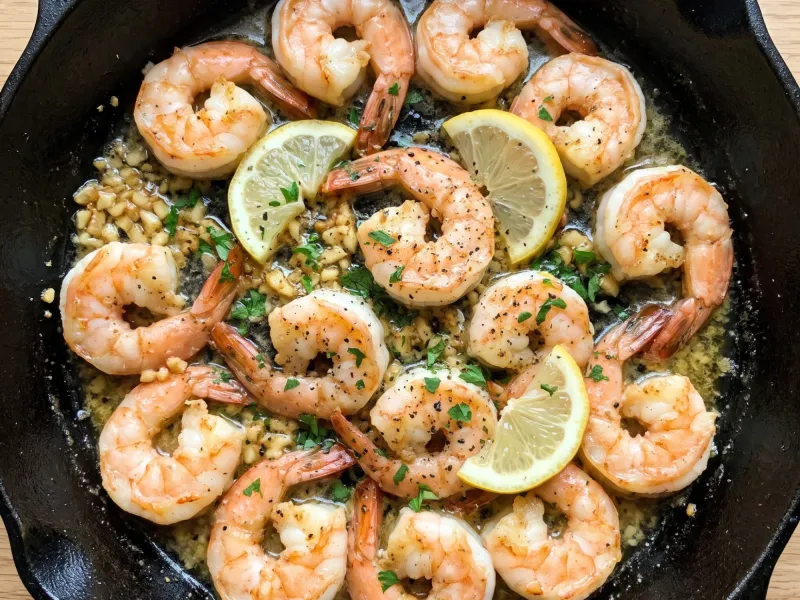
If you love garlic and butter with seafood, our garlic butter shrimp uses the same flavors and is ready even faster.
What Makes Lemon Butter Salmon for Two a Light Dinner
By our estimate, each serving has about 35 grams of protein, only 2 grams of carbs and almost no sugar. The richness comes from the salmon's own natural fats and a modest amount of butter, with no flour, sugar or cream in the sauce. It fits easily into a low-carb or low-sugar way of eating, and if protein is your focus, you'll find more ideas among our high-protein dinners for two.
What to Serve With It
- Something green. Roasted asparagus, green beans or a simple arugula salad with lemon and olive oil.
- Something to soak up the sauce. Rice, buttered orzo, couscous or small roasted potatoes.
- For a low-carb plate. Cauliflower rice or sautéed spinach with garlic.
A crisp Sauvignon Blanc or a dry rosé pairs nicely with the lemon. Sparkling water with a slice of cucumber works just as well.
Leftovers
Salmon is best right out of the pan, but leftovers keep in the fridge for up to 2 days. Rather than reheating, which can dry it out, flake the cold salmon over a green salad, toss it with pasta and a squeeze of lemon, or fold it into scrambled eggs. If you prefer it warm, reheat it gently in a covered skillet over low heat with a teaspoon of water.
If the skin sticks when you try to flip it, it isn't ready yet. Give it another 30 seconds and it usually lets go on its own. I also found the butter browns faster than expected in a hot cast-iron pan, so I turn the heat down a moment before it goes in, not after. That way the garlic stays golden instead of bitter.