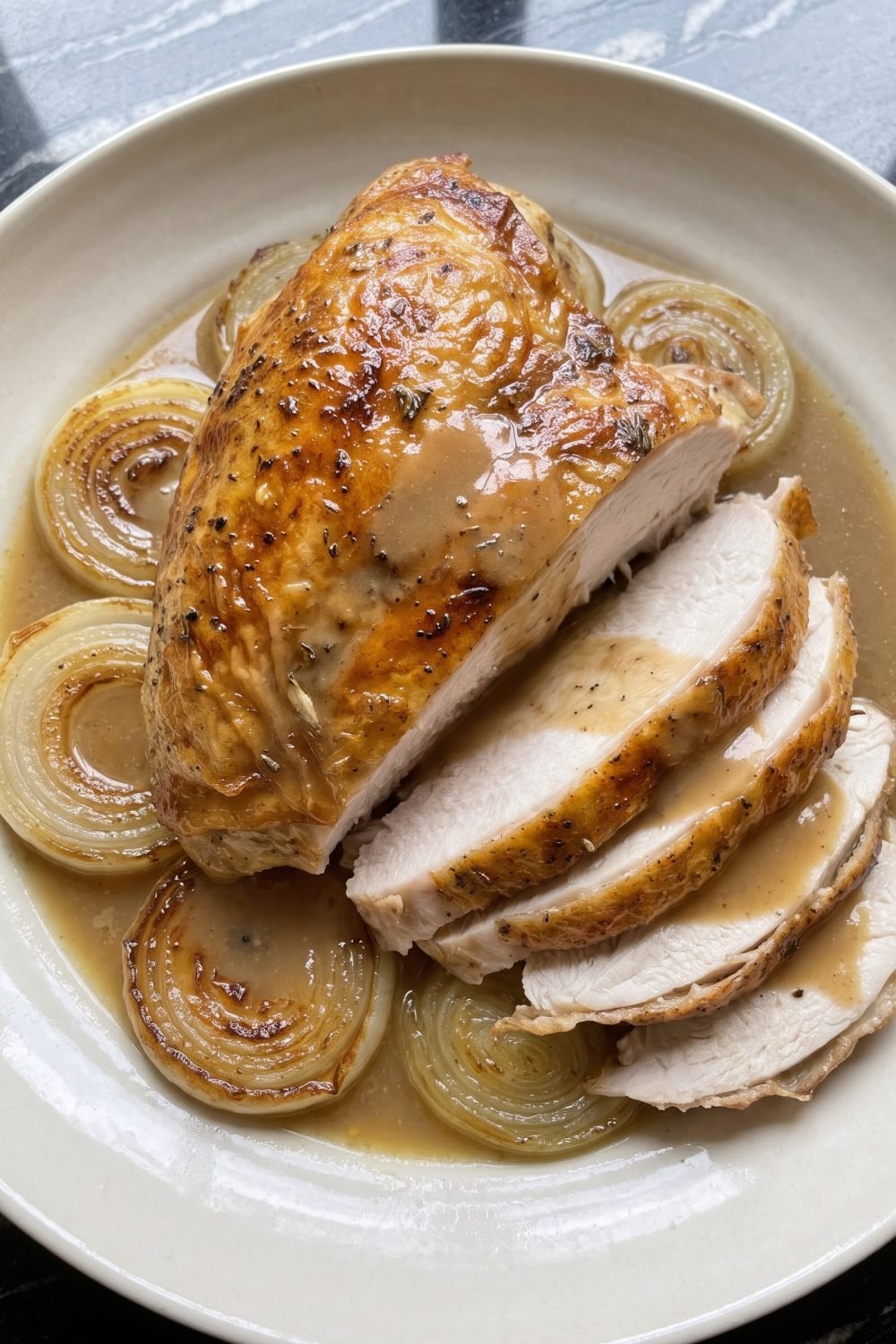
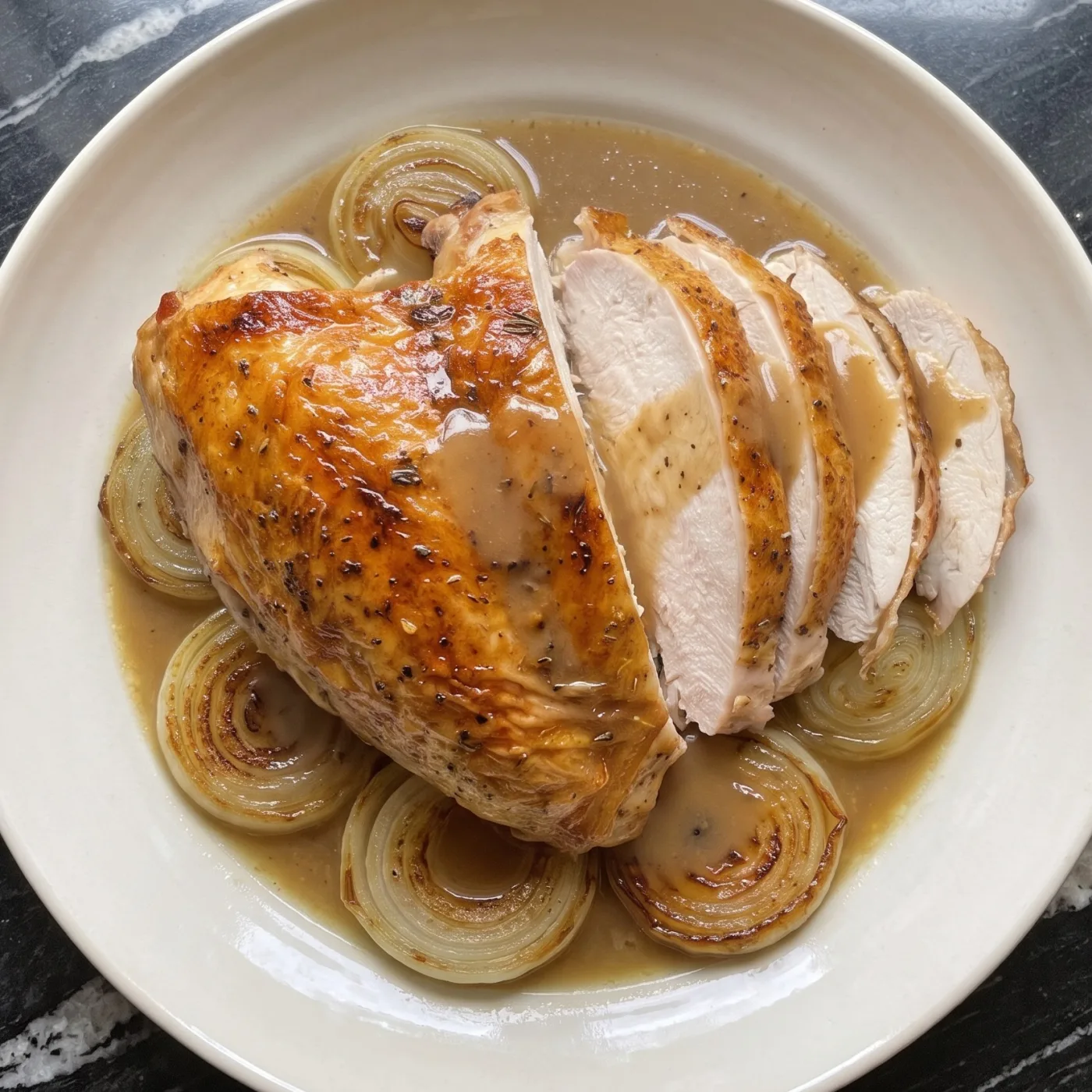
This roast turkey breast for two has the golden skin, juicy slices and real pan gravy of a holiday turkey, without a 14-pound bird or a week of leftovers. A single bone-in breast half goes into a 10-inch cast-iron skillet on a bed of onions, with garlic herb butter tucked under the skin. While it rests, the drippings turn into gravy in the same pan.
It takes about 1 1/2 hours, and almost all of that is oven time. One skillet, one cutting board, and a small Thanksgiving or Christmas dinner is ready for the two of you.
Why a Skillet Beats a Roasting Pan
A big roasting pan is made for a whole bird. Put one turkey breast in it and the juices spread thin across all that empty metal, then burn before the meat is done. You lose the drippings, and the drippings are your gravy.
A 10-inch cast-iron skillet holds a 2-pound breast with just a little room around it. The juices pool in one place and stay liquid, and the heavy iron browns the onions without burning them. When the turkey comes out, the same skillet goes straight onto the stove for the gravy. The handle stays very hot for a long time, so keep an oven mitt on it.
Bone-In, Skin-On Is Worth Finding
Look for a bone-in, skin-on turkey breast half, sometimes labeled "split turkey breast." About 2 pounds is right for two people. Stores carry more of them from November through December, and a butcher can usually cut a whole breast in half for you. Freeze the other half for another day.
The bone does real work here. It slows the cooking near the center so the meat stays juicy, and it adds flavor to the drippings. The skin protects the meat and turns crisp and golden.
Read the label before you buy. Many turkey breasts are sold "enhanced" or "self-basting," which means they were injected with a salt solution. They're fine to use, but they're already seasoned, so cut the salt in half. A plain, natural turkey breast lets you season it yourself.
A 2-pound breast is a generous dinner. Depending on appetite, you may have a few slices left, and they make a very good sandwich the next day.
Salt It the Night Before, If You Can
If you have time, sprinkle the salt over the turkey the night before, under the skin and over it, and leave it uncovered on a plate in the fridge. This is called dry brining. The salt pulls out a little moisture, then dissolves and sinks back into the meat, so it's seasoned all the way through. The skin also dries in the cold air, which helps it crisp in the oven.
If you don't have time, salting right before roasting still works well. The recipe is written that way.
Butter Under the Skin, Not Just On It
Butter brushed only on top mostly slides off into the pan. Butter under the skin sits right on the meat, so the garlic, thyme, sage and lemon zest flavor the turkey itself and baste it as they melt.
Start at the wide end and slide your fingers gently between the skin and the meat. Go slowly so you don't tear the skin, and leave it attached along the edges. Push about two-thirds of the herb butter into that pocket, then press on the outside of the skin to spread it evenly. The rest goes over the skin, where it helps it brown.
The Onion Bed Does Two Jobs
The thick onion rounds under the turkey lift it off the hot iron, so the bottom doesn't stick or overcook. They also soften and brown in the drippings, which gives the gravy a deep, sweet flavor without any extra work.
The 1/4 cup of broth poured around the onions at the start keeps them from scorching early on. Around the 30-minute mark, take a quick look. If the pan looks dry and the onions are turning dark at the edges, add a couple of tablespoons of water.
How to Tell When Turkey Breast Is Done
An instant-read thermometer is the only sure way. Push it into the thickest part of the breast, close to the bone but not touching it. Take the turkey out of the oven at 160°F (71°C). During the 15-minute rest it keeps climbing to the safe 165°F (74°C). Check it once more before slicing to be sure.
Without a thermometer, pierce the thickest part with a knife. The juices should run clear, not pink, and the meat should feel firm when you press it. A thermometer is cheap, though, and it's the difference between juicy turkey and dry turkey.
Why Turkey Breast Turns Out Dry
- Cooked past 165°F: Breast meat is lean, and every few degrees past done squeezes out more juice. Start checking 10 minutes early.
- Sliced too soon: Cut it straight from the oven and the juices end up on the board. The 15-minute rest matters.
- Too much pan: In a big roasting pan the drippings burn and the edges overcook. Stick with the 10-inch skillet.
- A very cold center: A breast straight from a very cold fridge can take longer than you expect. Go by temperature, not the clock.
A Quick Gravy While It Rests
The gravy comes together in the 15 minutes the turkey rests. Set the skillet over medium heat, add the rest of the broth and scrape up every browned bit from the bottom. Those bits carry most of the flavor.
This gravy is thickened with a little cornstarch stirred into cold water, which keeps it gluten-free and is less likely to turn lumpy than a flour gravy. If you prefer a classic flour gravy, the butter-and-flour method from our pork chops with pan gravy works with these drippings too. Strain out the onions for a smooth gravy, or leave them in for a rustic one.
Roast Turkey Breast for Two at Thanksgiving or Christmas
This is a holiday dinner sized for a quiet table. Mashed potatoes, green beans or roasted carrots and a spoonful of cranberry sauce turn it into the full spread. The turkey only needs one oven rack, so there's room to roast a tray of vegetables at the same 400°F (200°C).
If you'd like a different main this season, our roast chicken for two gives you a whole golden bird in the same size skillet, and roast lamb for two makes a lovely Christmas or Sunday dinner. A Pinot Noir or a dry Riesling goes well with turkey. For a non-alcoholic option, try sparkling apple cider.
Carving a Bone-In Breast
- Lay the rested breast skin side up on the board.
- Run a sharp knife along the breastbone, then down along the rib bones, easing the meat away as you go.
- Lift the meat off the bone in one piece.
- Slice it across the grain into 1/2-inch (1 cm) slices, keeping the skin on top of each one.
Save the bone if you like. It makes a small pot of broth.
Leftovers
Leftover turkey keeps in a covered container in the fridge for 3 to 4 days. Store the gravy separately. To reheat slices without drying them out, warm them in a covered skillet over low heat with a spoonful of gravy or broth. Cold slices are perfect in a sandwich with a little cranberry sauce, and cooked turkey freezes well for up to 3 months.
The thin end of the breast always looks done long before the thick part is ready. My first reading near the narrow end said 165°F while the center was still at 145°F. Now I push the probe in sideways from the thick end, right to the middle, and I trust only that reading.